Protective Relay Training - Basic
Our customized live online or in‑person group training can be delivered to your staff at your location.

- Live Online
- 12 hours Instructor-led
- Group Training Available
Regular Price:
$699
Coupon Price:
$599
TOKYO —
Iran's top nuclear negotiator recently confirmed that Tehran would allow international nuclear inspections to resume unconditionally at the end of March.
Iran had said that it was indefinitely shutting out IAEA inspectors, after the agency's 35-nation governing board adopted a resolution that said it "deplores" recent discoveries of uranium enrichment equipment and other suspicious activities that Iran had failed to reveal.
But the head of the U.N. International Atomic Energy Agency, Mohamed ElBaradei, said Monday that Iran was ready to allow inspectors back into the country starting March 27. Hasan Rowhani, on a three-day visit in Japan, backed that as well.
"It is certain. And it will be without any conditions,'' Rowhani, who also heads Iran's Supreme National Security Council, said at a news conference in Tokyo.
Tehran insists its nuclear activities are for the generation of electricity, but Washington suspects it has a secret program to build nuclear weapons and had called for even harsher language in the agency's resolution.
Asked about the allegations, Rowhani said: "The United States has made many groundless statements." He reaffirmed Iran's claim that it only wants to use nuclear power for peaceful purposes.
Washington should present to the IAEA any evidence it has to back its suspicions, and inspectors will go and check it, Rowhani said.
Rowhani met with Foreign Minister Yoriko Kawaguchi. Most of the 21/2-hour meeting was devoted to the latest development on nuclear inspections, a Foreign Ministry official said on condition of anonymity.
In February, Japan closed an estimated $2 billion deal with the Iranian government to develop the Azadegan oil field, believed to be one of the largest in the Middle East. The United States had opposed because it fears the money could go to nuclear proliferation.
Related News
Altmaier's new electricity forecast: the main driver is e-mobility
Germany 2030 Electricity Demand Forecast projects 658 TWh, driven by e-mobility, heat pumps, and green…
View more
Ukraine fights to keep the lights on as Russia hammers power plants
Ukraine Power Grid Attacks disrupt critical infrastructure as missiles and drones strike power plants, substations,…
View more
Wall Street Backs Rick Perry’s $19 Billion Data Center Venture
Wall Street backs Rick Perry’s $19 billion nuclear-powered data center venture, Fermi America, combining nuclear…
View more
Is Ontario embracing clean power?
Ontario Clean Energy Expansion signals IESO-backed renewables, energy storage, and low-CO2 power to meet EV-driven…
View more

Electricity Demand In The Time Of COVID-19
COVID-19 Impact on U.S. Power Demand shows falling electricity load, lower wholesale prices, and resilient…
View more
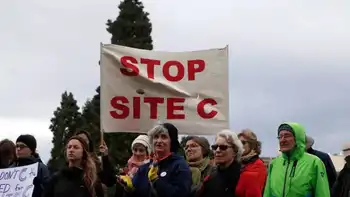
Site C dam could still be cancelled at '11th hour' if First Nations successful in court
Site C Dam Court Ruling could halt hydroelectric project near Fort St. John, as First…
View more
Sign Up for Electricity Forum’s Newsletter
Stay informed with our FREE Newsletter — get the latest news, breakthrough technologies, and expert insights, delivered straight to your inbox.
Electricity Today T&D Magazine Subscribe for FREE

Stay informed with the latest T&D policies and technologies.
- Timely insights from industry experts
- Practical solutions T&D engineers
- Free access to every issue

