NFPA 70b Training - Electrical Maintenance
Our customized live online or in‑person group training can be delivered to your staff at your location.

- Live Online
- 12 hours Instructor-led
- Group Training Available
Regular Price:
$699
Coupon Price:
$599
A unilateral European approach to curbing greenhouse gas emissions will drive energy-intensive industries to move to other countries, according to a joint policy statement by the region's biggest electricity producers and their largest industrial customers.
The International Federation of European Industrial Energy Consumers (IFIEC) and Union of the Electricity Industry (Eurelectric) said bills would rise as a result of European Union policies designed to encourage greater development of renewable energy schemes, such as wind farms.
An EU directive requires the amount of electricity generated from renewable sources to rise from 14 per cent to about 22 per cent by 2010. The actual increase would be even greater, as the directive excludes large hydroelectric schemes which form the bulk of current renewable energy capacity.
The European Commission is due to decide next year whether to propose making the targets binding. Electricity producers and customers say major competitors such as the US have yet to sign up to the Kyoto agreement principles requiring reduction of greenhouse gas emissions.
"A unilateral approach to curbing greenhouse gas emissions will lead to further market distortions and loss of competitiveness with the non-Kyoto world," they say. Economic reality will unavoidably drive energy-intensive industries to invest outside Europe, or even to close down existing plants within the EU.
"Introducing renewable energy unavoidably leads to higher electricity prices. Not only are production costs substantially higher, but intermittent energy sources like wind energy imply back- up capacity, which adds considerably to the end price."
The joint statement is critical of other energy policies being considered by the EU which it says would "lead to an unstable regulatory framework imposing costly and distortive burdens".
These could include allowing member states to provide "non-market" financial assistance for combined heat and power developments.
Related News
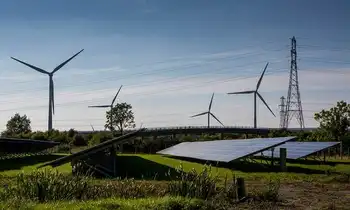
Wind and solar make more electricity than nuclear for first time in UK
UK Renewables Surpass Nuclear Milestone as wind farms and solar panels outpace atomic output, cutting…
View more
China's electric power woes cast clouds on U.S. solar's near-term future
China Power Rationing disrupts the solar supply chain as coal shortages, price controls, and dual-control…
View more
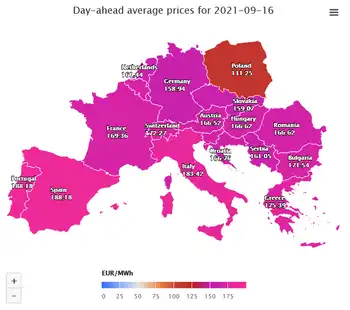
Energy crisis is a 'wake up call' for Europe to ditch fossil fuels
EU Clean Energy Transition underscores the shift from fossil fuels to renewable energy, decarbonization, and…
View more

Setbacks at Hinkley Point C Challenge UK's Energy Blueprint
Hinkley Point C delays highlight EDF cost overruns, energy security risks, and wholesale power prices,…
View more
Quebec's electricity ambitions reopen old wounds in Newfoundland and Labrador
Quebec Churchill Falls power deal renewal spotlights Hydro-Que9bec's Labrador hydroelectricity, Churchill River contract extension, Gull…
View more
The Phillipines wants nuclear power to be included in the country's energy mix as the demand for electricity is expected to rise.
Philippines Nuclear Energy Policy aims to add nuclear power to the energy mix via executive…
View more
Sign Up for Electricity Forum’s Newsletter
Stay informed with our FREE Newsletter — get the latest news, breakthrough technologies, and expert insights, delivered straight to your inbox.
Electricity Today T&D Magazine Subscribe for FREE

Stay informed with the latest T&D policies and technologies.
- Timely insights from industry experts
- Practical solutions T&D engineers
- Free access to every issue

