NFPA 70E Training
Our customized live online or in‑person group training can be delivered to your staff at your location.

- Live Online
- 6 hours Instructor-led
- Group Training Available
Regular Price:
$199
Coupon Price:
$149
Researchers at Purdue University said recently that they have come up with a way to cool computer chips by using the power of electrical storms.
Mechanical engineers at Purdue have filed patents for technologies that eventually could be used to create a device that would cool computer chips by generating lightning and wind on a microscopic level using carbon nanotubes. The patents arose from a research project funded in part by the U.S. National Science Foundation.
The researchers have only demonstrated the idea conceptually, but they assert that it could help future computer builders tackle the growing problem of chip generated heat in a more reliable way than they could through liquid cooling.
In the Purdue device, an array of carbon nanotubes — long, thin strands of specialized carbon molecules — would be placed near a chip. A negative charge would be applied to some of the nanotubes, which would cause electrons to be emitted. When the electrons mix with the surrounding air, the air becomes ionized. The microscopic cloud of ionized air then leads to an imbalance of charge in the micro-atmosphere, and lightning results. It's microscopic lightning, but the principle is the same as in an electrical storm.
Meanwhile, the cloud of electrons would be alternatively attracted to and repelled by adjacent electrodes. Alternating the voltages on the electrodes creates a cooling breeze because the moving cloud stirs the air.
"To create lightning, you need tens of kilovolts, but we do it with 100 volts or less," said a statement from Suresh Garimella, a professor of mechanical engineering at Purdue who is working on the device. "In simple terms, we are generating a kind of lightning on a nano-scale here."
The next step for the researchers will be to develop a prototype and examine different materials along with nanotubes that could be used in the device. Several technical problems will also likely have to be resolved before these types of devices, even if made, can be put into computers. Semiconductors, for instance, are wrapped with spark arresters. Static electricity can blow a hole through a chip, and the Purdue device is essentially creating static.
Heat is the chief problem facing semiconductor designers today. Future microprocessors will generate as much heat, proportionally speaking, as a nuclear power plant if solutions are not developed, several researchers have theorized. IBM, Intel and others have already begun inserting energy-conserving technology into their chips.
Several start-ups and established companies are also looking at better heat sinks, which draw heat away from chips and into the atmosphere. Additionally, some companies, such as Zyvex and Carbon Nanotechnologies, are devising ways to use carbon nanotechnologies in gels that will remove heat from tiny places.
Related News
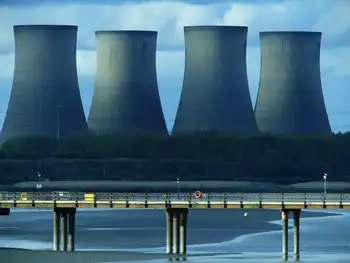
Explainer: Why nuclear-powered France faces power outage risks
France Nuclear Power Outages threaten the grid as EDF reactors undergo stress corrosion inspections, maintenance…
View more
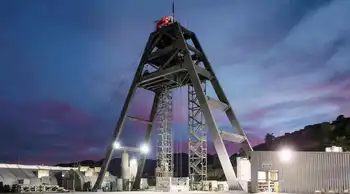
Rio Tinto seeking solutions that transform heat from underground mines into electricity
Rio Tinto waste heat-to-electricity initiative captures underground mining thermal energy at Resolution Copper, Arizona, converting…
View more
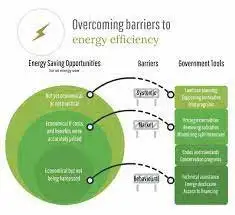
Ontario to Provide New and Expanded Energy-Efficiency Programs
Ontario CDM Programs expand energy efficiency, demand response, and DER incentives via IESO's Save on…
View more
AI Data Centers Push Power Grids as Energy Costs Rise
AI data centers are driving up electricity demand as companies scale artificial intelligence. Former Facebook…
View more

Ameren, Safe Electricity urge safety near downed lines
Downed Power Line Vehicle Safety: Follow stay-in-the-car protocol, call 911, avoid live wires and utility…
View more
Salmon and electricity at center of Columbia River treaty negotiations
Columbia River Treaty Negotiations involve Canada-U.S. talks on B.C. dams, flood control, hydropower sharing, and…
View more
Sign Up for Electricity Forum’s Newsletter
Stay informed with our FREE Newsletter — get the latest news, breakthrough technologies, and expert insights, delivered straight to your inbox.
Electricity Today T&D Magazine Subscribe for FREE

Stay informed with the latest T&D policies and technologies.
- Timely insights from industry experts
- Practical solutions T&D engineers
- Free access to every issue

