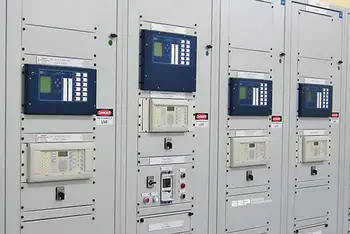
Protective Relay Training - Basic
Our customized live online or in‑person group training can be delivered to your staff at your location.
- Live Online
- 12 hours Instructor-led
- Group Training Available
Regular Price:
$699
Coupon Price:
$599
A big bond rating house says it is questioning whether it should continue to award Canadian utility companies high ratings on the strength of the standards of the regulatory agencies in the country.
Standard & Poor's said that in the past it has allowed Canadian utilities to carry relatively high debt loads, without suffering rating downgrades, because of the "supportive nature of Canadian utility regulation."
Now, Standard & Poor's says it's wondering whether it's appropriate to award bonus points for Canada's regulatory regime, and will undertake a lengthy review that could lead to downgrades.
In a report, the agency lists 15 companies whose ratings could be affected, including Toronto Hydro, which has been preparing to release a prospectus this spring for its first independent bond issue. A negative watch warning has been issued on five companies and maintained on 10 others.
Other companies named include Veridian Corp., Hamilton Utilities Corp. and Borealis Infrastructure Trust, part owner through Enersource Corp. of Enersource Hydro Mississauga.
But Standard & Poor's faced challenges from analysts who questioned whether the agency has done its homework.
"I have much more confidence in the Canadian regulators than I do in S&P's actions," Maureen Howe of RBC Dominion said bluntly.
Although Standard & Poor's review will encompass all provincial and federal utility regulators, it comes at a sensitive time for Ontario, where the electricity sector is in upheaval because of sudden changes in government policy.
As well, the province is overhauling the mandate of the Ontario Energy Board, or OEB. The OEB is under fire from Consumers Gas Distribution, which is challenging one of its rulings in court.
Tom Connell of Standard & Poor's said during a conference call that Canadian utilities of all stripes carry high debt.
"We do find Canadian utilities are highly leveraged compared to international peers," he said. "Traditionally, our comfort with regulatory arrangements has offset concerns over leverage, and supported ratings of `A' or higher.
"Now we are questioning whether Canadian regulation, on a jurisdiction by jurisdiction basis, warrants that particularly positive assessment."
Connell said the review shouldn't be perceived as a knock against the entire sector.
"We're not anticipating Canadian utilities being close to default," he said. "Far from it. We think Canadian utilities remain solid investment grade credit."
But analysts on the conference call were puzzled by the announcement, and kept asking why Standard & Poor's had chosen this particular moment for its review. Connell insisted there was no immediate trigger.
Howe said Standard & Poor's, which is based in New York and has offices in Toronto, should have a better grip on the web of regulatory regimes in Canada.
"There's no doubt in my mind these guys have not done the work to understand how, for instance, the B.C. Utilities Commission may differ in their regulation of companies from, say, how the Nova Scotia Public Utilities Commission does it," she said. "By their own admission, they haven't done it."
She also challenged Connell when he alluded to "gut feel" in assessing conditions.
"Your gut feel is that Canadian regulators are more credit friendly than many other regulators — your gut feel?" she said. "I'm just wondering: Do you often rely on gut feel to set credit ratings?"
"We take into account a wide range of factors. One never wants to lose sight of common sense in all these things as well," Connell said.
Spokespersons for energy minister John Baird and the OEB declined comment.
Related News
Africa must quadruple power investment to supply electricity for all, IEA says
Africa Energy Investment must quadruple, says IEA, to deliver electricity access via grids, mini-grids, and…
View more
Lebanon Cabinet approves watershed electricity sector reform
Lebanon Electricity Sector Reform aims to overhaul tariffs, modernize the grid, cut fuel oil subsidies,…
View more

COVID-19 Response: Electric Power Industry Closely Coordinating With Federal Partners
ESCC COVID-19 Response coordinates utilities, public power, and cooperatives to protect the energy grid and…
View more

Are Norwegian energy firms ‘best in class’ for environmental management?
CO2 Tax for UK Offshore Energy Efficiency can accelerate adoption of aero-derivative gas turbines, flare…
View more
Canada in top 10 for hydropower jobs, but doesn't rank on other renewables
Canada Renewable Energy Jobs rank top 10 in hydropower, says IRENA, but trail in solar…
View more

How Alberta’s lithium-laced oil fields can fuel the electric vehicle revolution
Alberta Lithium Brine can power EV batteries via direct lithium extraction, leveraging oilfield infrastructure and…
View more
Sign Up for Electricity Forum’s Newsletter
Stay informed with our FREE Newsletter — get the latest news, breakthrough technologies, and expert insights, delivered straight to your inbox.
Electricity Today T&D Magazine Subscribe for FREE

Stay informed with the latest T&D policies and technologies.
- Timely insights from industry experts
- Practical solutions T&D engineers
- Free access to every issue
