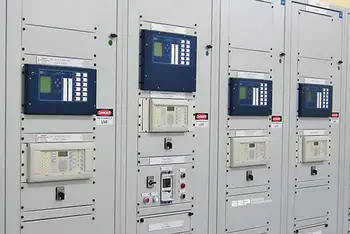
Protective Relay Training - Basic
Our customized live online or in‑person group training can be delivered to your staff at your location.
- Live Online
- 12 hours Instructor-led
- Group Training Available
Regular Price:
$699
Coupon Price:
$599
R.J. Rudden Associates, Inc. (Rudden) released a report titled, "The Next Big Crunch: T&D Capital Expenditures," describing an alarming pattern regarding the lack of spending in electric transmission and distribution infrastructure.
The author, Leonard S. Hyman, a Senior Associate at Rudden, is predicting future deterioration in electric system reliability if appropriate regulatory incentives are not provided and inadequate spending on infrastructure continues. Mr. Hyman attributes the sector's lack of activity in capital system improvements to a number of causes and describes the gap as "too large to ignore."
Citing past industry standards, Mr. Hyman states that electric utilities and transmission owners should spend about $63 billion for distribution improvements, and about $25 billion for transmission improvements, in the 2001-2005 period. However, in 2001, utilities spent only $8.5 billion on distribution and $3.7 billion on transmission, leaving balances of $54.5 billion and $21.3 billion, respectively, for 2002-2005. That averages out to $13.6 billion per year for distribution and $5.3 billion per year for transmission. Leonard asks, "Has the industry become astoundingly more efficient in managing its capital expenditures or should we expect the spending plans to rise dramatically?"
The report postulates that deregulated activities diverted money away from investing money on system improvement and replacement, in favor of steering funds toward deregulated activities with the potential promise of a higher return than regulated assets could earn. Regulators, inadvertently, encouraged the same pattern when they implemented price caps as part of bargains that liberated generating assets from regulation. Now the bill is coming due.
Financially, the utility and energy sectors are under tremendous pressure to pay off debt. Mr. Hyman predicts that filings for rate increases will be necessary to cover the costs of new capital needed for the higher level of spending required to maintain reliability.
Related News

Ontario pitches support for electric bills
Ontario CEAP Program provides one-time electricity bill relief for residential consumers via local utilities, supports…
View more
Canadian Electricity Grids Increasingly Exposed to Harsh Weather
North American Grid Reliability faces extreme weather, climate change, demand spikes, and renewable variability; utilities,…
View more
ACCIONA Energía Launches 280 MW Wind Farm in Alberta
Forty Mile Wind Farm delivers 280 MW of renewable wind power in Alberta, with 49…
View more

Sudbury, Ont., eco groups say sustainability is key to grid's future
Sudbury Electrification and Grid Expansion is driving record power demand, EV charging, renewable energy planning,…
View more

Portsmouth residents voice concerns over noise, flicker generated by turbine
Portsmouth Wind Turbine Complaints highlight noise, shadow flicker, resident impacts, Town Council hearings, and Green…
View more

By Land and Sea, Clean Electricity Needs to Lead the Way
Martha's Vineyard 100% Renewable Energy advances electrification across EVs, heat pumps, distributed solar, offshore wind,…
View more
Sign Up for Electricity Forum’s Newsletter
Stay informed with our FREE Newsletter — get the latest news, breakthrough technologies, and expert insights, delivered straight to your inbox.
Electricity Today T&D Magazine Subscribe for FREE

Stay informed with the latest T&D policies and technologies.
- Timely insights from industry experts
- Practical solutions T&D engineers
- Free access to every issue

