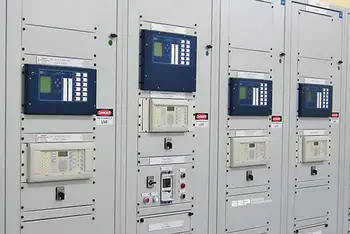
Protective Relay Training - Basic
Our customized live online or in‑person group training can be delivered to your staff at your location.
- Live Online
- 12 hours Instructor-led
- Group Training Available
Regular Price:
$699
Coupon Price:
$599
Storing captured carbon dioxide (CO2) under the sea was brought a step closer to reality following an announcement by the UK and Norway that the countries are to study how the North Sea can be used for this purpose.
The study will examine how European countries will be able to store CO2 captured by carbon capture and storage systems (CCS). The joint venture was commissioned at the conference on Climate Change and Technology in Bergen, Norway, by Lord Hunt, Minister of State for Energy and Climate Change in the UK, and the Norwegian Minister of Petroleum and Energy, Terje Riis-Johansen.
In the UK, Germany and other European countries, energy companies can no longer build new gas or coal-fired power plants without a CCS plan. CCS demonstrations are getting under way at a small number of sites throughout Europe with a view to rolling out full-scale CCS operations at older fossil-fuel plants by 2020, in line with the European Union's guidelines for reducing carbon emissions. At the recent Power-Gen show in Cologne, Germany, energy companies were warned that they need to start planning for CCS now.
The wide-ranging study will assess how quickly the North Sea could be needed for carbon-dioxide storage and the preparations that countries like the UK, Norway and others must make, as well as the timeline that must be followed. The study will build a profile for the whole of the North Sea, assessing each country's storage potential and projections of likely volumes and locations of carbon-dioxide flows against the rising price of carbon. The study will involve identifying network issues and proposing methods for managing CO2 flows across borders. The study will also consider how the business of offshore storage may develop.
"Today's agreement reaffirms the UK's leadership in tackling the emissions from fossil fuel power generation," said Lord Hunt. "Carbon capture and storage has the potential to reduce emissions from coal-fired power stations by around 90%. The strength of the UK's offshore industries means we are well-placed to store that carbon dioxide under the North Sea. The benefits of CCS are not only environmental. There are clear business and job opportunities to be found in green-energy technology. This study will help assist the governments in Europe to work together to store carbon dioxide safely under the North Sea and to plan the implementation of CCS."
Both companies have also announced plans to raise the profile of CCS technology internationally through conferences and education, as well committing to sharing information on national CCS demonstrations.
This new study follows on from one published by ScottishPower plc last month, claiming that the North Sea could store hundreds of years' worth of CO2 emissions. The detailed study shows that the central North Sea could potentially store all of Europe's CO2 emissions well into the next century, in a number of saline aquifers beneath the seabed and in depleted oil and gas fields.
Related News
Kenya Power on the spot over inflated electricity bills
Kenya Power token glitches, inflated bills disrupt prepaid meters via M-Pesa paybill 888880 and third-party…
View more
Solar Now ‘cheaper Than Grid Electricity’ In Every Chinese City, Study Finds
China Solar Grid Parity signals unsubsidized industrial and commercial PV, rooftop solar, and feed-in tariff…
View more
If B.C. wants to electrify all road vehicles by 2055, it will need to at least double its power output: study
B.C. EV Electrification 2055 projects grid capacity needs doubling to 37 GW, driven by electric…
View more

Senate Democrats push for passage of energy-related tax incentives
Senate Renewable Energy Tax Credits face Finance Committee scrutiny, with Democrats urging action on tax…
View more
$1.6 Billion Battery Plant Charges Niagara Region for Electric Vehicle Future
Ontario EV Battery Separator Plant anchors Canada's EV supply chain, with Asahi Kasei producing lithium-ion…
View more
RMI urges faster transmission expansion as U.S. electricity demand rises
U.S. Grid Expansion needs faster transmission planning, interconnection reform, advanced grid technologies, and demand flexibility…
View more
Sign Up for Electricity Forum’s Newsletter
Stay informed with our FREE Newsletter — get the latest news, breakthrough technologies, and expert insights, delivered straight to your inbox.
Electricity Today T&D Magazine Subscribe for FREE

Stay informed with the latest T&D policies and technologies.
- Timely insights from industry experts
- Practical solutions T&D engineers
- Free access to every issue

