Protective Relay Training - Basic
Our customized live online or in‑person group training can be delivered to your staff at your location.
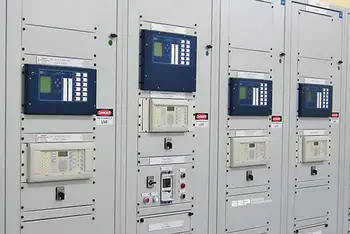
- Live Online
- 12 hours Instructor-led
- Group Training Available
Regular Price:
$699
Coupon Price:
$599
Greenhouse gas emissions by leading industrialized nations have accelerated since 2000 and several countries are performing worse than the United States which opposes a U.N. pact for curbing global warming, U.N. data shows.
Leaders of the Group of Eight rich nations are meeting in Germany with President George W. Bush resisting pressure by German Chancellor Angela Merkel to agree to cap emissions, mainly from burning fossil fuels.
But Bush is not alone in presiding over rising emissions.
"Growth rates... of emissions in the U.S. are slowing," said Michael Raupach, of the Earth Observation Centre in Canberra, Australia, of overall greenhouse gas trends. "European emissions are creeping up in the post-2000 years."
National data submitted to the U.N.'s Climate Change Secretariat show that overall emissions by G8 nations rose 2.0 percent from 2000 to 14.3 billion tonnes in 2005 and were up 0.7 percent since 1990, the base year for the U.N.'s Kyoto Protocol.
Among G8 nations, Russia, Italy and Canada have all had bigger rises than the 1.6 percent U.S. gain since 2000, when Bush won election to the White House. The revival of the Russian economy after the collapse of the Soviet Union is a main spur.
Only Britain, Germany and France have cut back since 2000.
Since 1990, however, the United States has had a 16.3 percent rise, second worst behind Canada. All G8 nations back Kyoto except the United States, the biggest world emitter.
And Kyoto nations expect falls in emissions in coming years when investments, for instance in energy efficiency or wind or hydro power, will take effect. G8 comparisons for 2005 are possible after Canada and Japan provided data.
"The main driver for emissions has not been the Kyoto Protocol but how economies have been developing," said Keywan Riahi, a senior researcher at the International Institute for Applied Systems Analysis in Austria.
Economic growth and rising populations tend to spur emissions from factories, power plants and cars but energy efficiency, partly inspired by Kyoto, and a shift away from heavy industry towards services are among brakes for G8 nations.
Among big shifts, Russian emissions are up 7.3 percent since 2000, mainly driven by an economic rebound after the collapse of the Soviet Union and its smokestack industries. But Russia is still 28.7 percent below 1990 levels.
Bush said in 2001 that Kyoto would threaten U.S. jobs and wrongly excluded developing nations from first targets of a 5 percent cut by 2008-12. He prefers voluntary agreements and investments in new technologies, such as hydrogen or clean coal.
"My personal view is that the importance of Kyoto was not for the actual emissions reductions it may achieve - which are tiny compared with what is needed - but rather that Kyoto was a first attempt to build a global consensus and commitment," Raupach said.
"In that, it has been less than fully successful," he said.
Merkel wants Bush to agree to Kyoto-style caps, with extra urgency after U.N. climate reports this year have said world emissions will need to be cut to help avert more hunger, water shortages, heatwaves and rising seas.
The White House said that preliminary data showed that U.S. emissions of carbon dioxide, the main greenhouse gas, fell by 1.3 percent in 2006. "We are effectively confronting the important challenge of global climate change," Bush said.
Raupach said, however, that a warm winter contributed to cut U.S. heating demand and a less than scorching 2005 summer had also curbed use of air conditioning.
Related News
Ukraine Helps Spain Amid Blackouts
Ukraine-Spain Power Aid highlights swift international solidarity as Kyiv offers grid restoration expertise to Spain…
View more
Why the promise of nuclear fusion is no longer a pipe dream
ITER Nuclear Fusion advances tokamak magnetic confinement, heating deuterium-tritium plasma with superconducting magnets, targeting net…
View more

Disrupting Electricity? This Startup Is Digitizing Our Very Analog Electrical System
Solid-State AC Switching reimagines electrification with silicon-based, firmware-driven controls, smart outlets, programmable circuit breakers, AC-DC…
View more
During this Pandemic, Save Money - How To Better Understand Your Electricity Bill
Commercial Electric Tariffs explain utility rate structures, peak demand charges, kWh vs kW pricing, time-of-use…
View more
Cape Town to Build Own Power Plants, Buy Additional Electricity
Cape Town Renewable Energy Plan targets 450+ MW via solar, wind, and battery storage, cutting…
View more
Basin Electric and Clenera Renewable Energy Announce Power Purchase Agreement for Montana Solar Project
Cabin Creek Solar Project Montana delivers 150 MW of utility-scale solar under a Power Purchase…
View more
Sign Up for Electricity Forum’s Newsletter
Stay informed with our FREE Newsletter — get the latest news, breakthrough technologies, and expert insights, delivered straight to your inbox.
Electricity Today T&D Magazine Subscribe for FREE

Stay informed with the latest T&D policies and technologies.
- Timely insights from industry experts
- Practical solutions T&D engineers
- Free access to every issue
