Protective Relay Training - Basic
Our customized live online or in‑person group training can be delivered to your staff at your location.
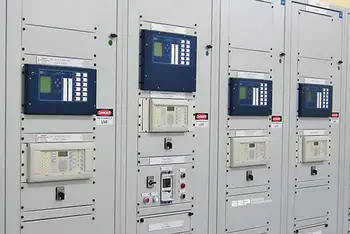
- Live Online
- 12 hours Instructor-led
- Group Training Available
Regular Price:
$699
Coupon Price:
$599
The debate over the health and environmental effects of a proposed coal plant has shifted to one over the plant's estimated price: $800 million.
That's how much City Commissioner Allan Katz, who is against building the plant in Taylor County, estimates financing the city's 150-megawatt share of the plant would cost. City staff members said the price tag represents the biggest investment any of them can recall in the city's history.
It's not clear how much it would cost utility customers. But Katz thinks the potential savings from the coal plant aren't worth the investment, an analysis city staff members dispute.
Commissioners are set to adopt a 20-year power plan for the city at their Sept. 13 meeting. Their decision includes whether to participate in the coal plant, an alternative Tallahassee voters allowed the city to consider in a referendum last fall.
"It becomes an irrevocable financial commitment," said Katz, the lone commission to call for a no vote in the referendum. "That is, you're borrowing the money. You're stuck."
But city staff members say Katz's estimate is unfair because it includes the cost of financing the plant over 30 years. In today's dollars, the price tag is about $360 million.
If you said you paid $40,000 for a car, "everybody would think you're driving a Lexus," said Kevin Wailes, the general manager of the city's electric utility. "But what you're really driving is an Impala."
Wailes said the city might have to raise utility rates to pay for the plant, if commissioners were to choose traditional financing, which could start becoming due in 2009, three years before the proposed plant would go online. But other financing alternatives would delay payment until customers started seeing the benefits in lower electricity bills, he said.
The power plan that includes the coal plant would cost about $4.815 billion between 2006 and 2035, in today's dollars (that's without taking into account interest rate payments.) That includes everything from construction to operational to fuel costs. The next cheapest option is estimated at $4.87 billion, a $55 million savings.
Katz called the savings from what could be the city's largest ever investment "statistically insignificant."
Gary Brinkworth, the manager of strategic planning for the utility, agreed that savings wouldn't be the deciding factor.
"This plan is less about dollars," he said, "and more about diversity."
The coal plant plan presented was coupled with a $141 million energy savings component and a 30-megawatt biomass plant that commissioners asked staff to move forward with. Under that option, natural gas, whose recent price hikes have been blamed for high electricity bills, would account for slightly less than half of the city's energy production. Under the second cheapest option, natural gas would account for almost 80 percent of energy production.
Katz said there were other options the city could consider, including the possibility of buying 150-megawatts from an LS Power coal plant in southwest Georgia. Over the next few weeks, city utility staff members will be fine-tuning their analysis.
Related News

California Welcomes 70 Volvo VNR Electric Trucks
Switch-On Project Electric Trucks accelerate California freight decarbonization, deploying Volvo VNR Electric rigs with high-capacity…
View more

Iran turning thermal power plants to combined cycle to save energy
Iran Combined-Cycle Power Plants drive energy efficiency, cut greenhouse gases, and expand megawatt capacity by…
View more
France Demonstrates the Role of Nuclear Power Plants
France Nuclear Power Strategy illustrates a low-carbon, reliable baseload complementing renewables in the energy transition,…
View more

Electric vehicles are a hot topic in southern Alberta
Canada Electric Vehicle Adoption is accelerating as EV range doubles, fast-charging networks expand along the…
View more

Lump sum credit on electricity bills as soon as July
NL Hydro electricity credit delivers a one-time on-bill rebate from the rate stabilization fund, linked…
View more

ETP 2017 maps major transformations in energy technologies
Global Energy Electrification drives IEA targets as smart grids, storage, EVs, and demand-side management scale.…
View more
Sign Up for Electricity Forum’s Newsletter
Stay informed with our FREE Newsletter — get the latest news, breakthrough technologies, and expert insights, delivered straight to your inbox.
Electricity Today T&D Magazine Subscribe for FREE

Stay informed with the latest T&D policies and technologies.
- Timely insights from industry experts
- Practical solutions T&D engineers
- Free access to every issue
