CSA Z462 Arc Flash Training – Electrical Safety Compliance Course
Our customized live online or in‑person group training can be delivered to your staff at your location.
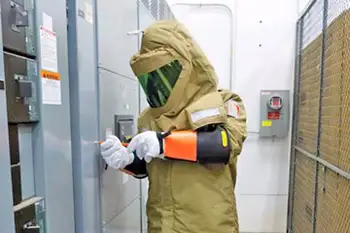
- Live Online
- 6 hours Instructor-led
- Group Training Available
Regular Price:
$249
Coupon Price:
$199
Iran has signed a key agreement recently opening its nuclear facilities to outside scrutiny, the U.N. atomic agency said, ending weeks of speculation that Tehran was stalling despite mounting Western pressure and an implicit threat of sanctions.
Mohamed ElBaradei, chief of the International Atomic Energy Agency, and an unidentified Iranian government signed the pact recently at the IAEA headquarters in Vienna, the agency said. The Tehran regime made clear it was laying to rest suspicions that it was reluctant to comply with Western demands for full openness. Since October, Iran repeatedly has said it would sign the accord, but its failure to follow through had led some foreign diplomats in Vienna to question its sincerity. After the Sept. 11 attacks, the Bush administration labeled Iran part of an ``axis of evil'' along with Iraq and North Korea, which Washington also suspects of developing weapons of mass destruction. ``We have agreed to sign ... to give a strong response to accusations against us and demonstrate that our nuclear activities are peaceful,'' Vice President Gholamreza Aghazadeh told reporters in Tehran. The agreement, tacked on to the Nuclear Nonproliferation Treaty, requires Iran to submit to intrusive and unannounced U.N. inspections of its nuclear complexes and research facilities. Iran agreed in November 2003 to open suspect sites that up to now have been off-limits, and to let IAEA inspectors conduct surprise checks to ensure the country is not trying to develop atomic weaponry as the United States alleges. The IAEA's 35-nation board censured Iran in November for 18 years of secrecy in a resolution that warned Tehran to stay in line with international efforts to make sure the country has no nuclear weapons ambitions. Although the resolution did not confront Iran with a direct threat of U.N. sanctions -- a tougher approach that Washington had sought -- it warned Tehran that the IAEA would consider further action if ``further serious Iranian failures'' arise. The wording implicitly warned Iran that the agency could report it to the Security Council, which has the power to impose economic or diplomatic sanctions. It called on Tehran to ``promptly and unconditionally sign, ratify and fully implement'' the accord but did not set a deadline. Iran insists its atomic energy program is peaceful and geared only to producing electricity. Under international pressure, it agreed to sign the inspection agreement and to suspend its enrichment of uranium, which it says had been confined to non-weapons levels anyway. The IAEA has been working to determine the source of traces of highly enriched, weapons-grade uranium on centrifuges and other equipment purchased abroad by Iran. The Iranian government contends the equipment already was contaminated when it acquired it. Aghazadeh, the Iranian vice president, called on Britain, France and Germany to help secure the release of nuclear equipment that Iran has bought. ``Many countries, especially European states, are holding considerable equipment we've purchased and have taken no action so far to unblock them,'' he said. Aghazadeh said the equipment included materials designed to ensure the safety of uranium conversion systems. Iran has made significant progress in building a 40-megawatt nuclear reactor in the central city of Arak, but it will take four to five years before the country will be able to produce and store the heavy water required to operate the reactor, Aghazadeh said.
The Tehran regime made clear it was laying to rest suspicions that it was reluctant to comply with Western demands for full openness.
Since October, Iran repeatedly has said it would sign the accord, but its failure to follow through had led some foreign diplomats in Vienna to question its sincerity.
After the Sept. 11 attacks, the Bush administration labeled Iran part of an ``axis of evil'' along with Iraq and North Korea, which Washington also suspects of developing weapons of mass destruction.
``We have agreed to sign ... to give a strong response to accusations against us and demonstrate that our nuclear activities are peaceful,'' Vice President Gholamreza Aghazadeh told reporters in Tehran.
The agreement, tacked on to the Nuclear Nonproliferation Treaty, requires Iran to submit to intrusive and unannounced U.N. inspections of its nuclear complexes and research facilities.
Iran agreed in November 2003 to open suspect sites that up to now have been off-limits, and to let IAEA inspectors conduct surprise checks to ensure the country is not trying to develop atomic weaponry as the United States alleges.
The IAEA's 35-nation board censured Iran in November for 18 years of secrecy in a resolution that warned Tehran to stay in line with international efforts to make sure the country has no nuclear weapons ambitions.
Although the resolution did not confront Iran with a direct threat of U.N. sanctions -- a tougher approach that Washington had sought -- it warned Tehran that the IAEA would consider further action if ``further serious Iranian failures'' arise.
The wording implicitly warned Iran that the agency could report it to the Security Council, which has the power to impose economic or diplomatic sanctions. It called on Tehran to ``promptly and unconditionally sign, ratify and fully implement'' the accord but did not set a deadline.
Iran insists its atomic energy program is peaceful and geared only to producing electricity. Under international pressure, it agreed to sign the inspection agreement and to suspend its enrichment of uranium, which it says had been confined to non-weapons levels anyway.
The IAEA has been working to determine the source of traces of highly enriched, weapons-grade uranium on centrifuges and other equipment purchased abroad by Iran. The Iranian government contends the equipment already was contaminated when it acquired it.
Aghazadeh, the Iranian vice president, called on Britain, France and Germany to help secure the release of nuclear equipment that Iran has bought.
``Many countries, especially European states, are holding considerable equipment we've purchased and have taken no action so far to unblock them,'' he said. Aghazadeh said the equipment included materials designed to ensure the safety of uranium conversion systems.
Iran has made significant progress in building a 40-megawatt nuclear reactor in the central city of Arak, but it will take four to five years before the country will be able to produce and store the heavy water required to operate the reactor, Aghazadeh said.
Related News
First Reactor Installed at the UK’s Latest Nuclear Power Station
Hinkley Point C Reactor Installation signals UK energy security, nuclear power expansion, and low-carbon baseload,…
View more
China's Path to Carbon Neutrality
China Unified Power Market enables carbon neutrality through renewable integration, cross-provincial electricity trading, smart grid…
View more

BC Hydro cryptic about crypto mining electricity use
BC Hydro Crypto Mining Moratorium pauses high-load connection requests, as BCUC reviews electricity demand, gigawatt-hours…
View more
Site C dam could still be cancelled at '11th hour' if First Nations successful in court
Site C Dam Court Ruling could halt hydroelectric project near Fort St. John, as First…
View more
Canada Invests Over $960-Million in Renewable Energy and Grid Modernization Projects
Smart Renewables and Electrification Pathways Program enables clean energy and grid modernization across Canada, funding…
View more
Schneider Electric Aids in Notre Dame Restoration
Schneider Electric Notre Dame Restoration delivers energy management, automation, and modern electrical infrastructure, boosting safety,…
View more
Sign Up for Electricity Forum’s Newsletter
Stay informed with our FREE Newsletter — get the latest news, breakthrough technologies, and expert insights, delivered straight to your inbox.
Electricity Today T&D Magazine Subscribe for FREE

Stay informed with the latest T&D policies and technologies.
- Timely insights from industry experts
- Practical solutions T&D engineers
- Free access to every issue

