NFPA 70E Training
Our customized live online or in‑person group training can be delivered to your staff at your location.

- Live Online
- 6 hours Instructor-led
- Group Training Available
Regular Price:
$199
Coupon Price:
$149
Wholesale electricity prices gained in the Western U.S. amid forecasts for higher-than-normal temperatures in the Southwest and the shutdown of two generators in Northern California.
Cooling demand will be 6 percent above normal tomorrow in Phoenix, and double the average in Reno, Nevada, according to forecaster Weather Derivatives. The high temperature in Phoenix will be 110 degrees Fahrenheit (43 Celsius) tomorrow, six degrees above average, the Weather Channel said.
At the Mead substation, near Hoover Dam at the border of Nevada and Arizona, wholesale power surged $11.04, or 17 percent, to $76.67 a megawatt-hour at 7:59 a.m. local time, according to Bloomberg data. It was the region's biggest gain in more than two weeks and the highest price since May 30.
"It looks like a little weather, staying kind of the same as yesterday," is boosting power prices, said Saul Lopez, an electricity trader at Silicon Valley Power, the municipal utility in Santa Clara, California. Power demand tends to increase during a heat wave because it takes more and more air conditioning to keep buildings cool.
In Southern California, the price for electricity gained for a second day, rising $9.86, or 17 percent, to $69.23 a megawatt- hour. The price in Northern California increased $5.58, or 10 percent, to $59.38. Northern California power traded as high as $64 a megawatt-hour this morning on the Bloomberg PowerMatch trading system.
The California Independent System Operator, the agency that manages the state's power grid, had asked generators to postpone maintenance work on their power plants for a second straight day because "resources may be inadequate" today. The request was canceled at 9 a.m.
Duke Energy Corp.'s Moss Landing Unit 6 and Unit 7 generators, located about 12 miles northwest of Salinas, California, are expected to be back online either late today or early tomorrow, Duke spokesman Pat Mullen said. The generators can produce 1,510 megawatts.
Wholesale electricity at the California-Oregon border gained $3.75, or 7.6 percent, to $53 a megawatt-hour. At Washington's Mid-Columbia trading point, a benchmark for the Northwest, the price increased $4.05, or 8.9 percent, to $49.45 a megawatt-hour.
One megawatt-hour can power 800 typical U.S. homes for an hour, according to the U.S. Energy Department.
In the Four Corners region, where Colorado, New Mexico, Arizona and Utah meet, the price for power rose for a third session, increasing $12.08, or 18 percent, to $78.33 a megawatt- hour. It was the region's highest price since March 5. At the Palo Verde switchyard in Arizona, the price gained $9.41, or 14 percent, to $74.56.
Related News

Opinion: Nuclear Beyond Electricity
Nuclear decarbonization leverages low-carbon electricity, process heat, and hydrogen from advanced reactors and SMRs to…
View more
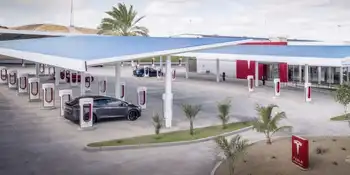
Tesla updates Supercharger billing to add cost of electricity use for other than charging
Tesla Supercharger Billing Update details kWh-based pricing that now includes HVAC, battery thermal management, and…
View more

FortisAlberta Takes Necessary Precautions to Provide Electricity Service for Alberta
FortisAlberta COVID-19 response delivers safe electricity distribution across Alberta, with remote monitoring, 24/7 support, outage…
View more
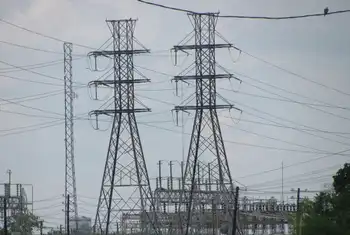
Electricity complaints filed by Texans reach three-year high, report says
Texas Electricity Complaints surged to a three-year high, highlighting Public Utility Commission data on billing…
View more
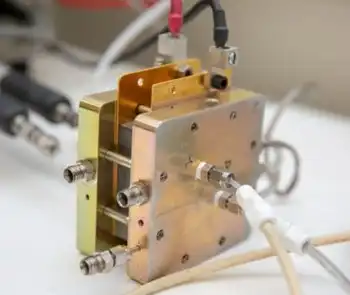
New fuel cell concept brings biological design to better electricity generation
Quinone-mediated fuel cell uses a bio-inspired organic shuttle to carry electrons and protons to a…
View more

Elizabeth May wants a fully renewable electricity grid by 2030. Is that possible?
Green Party Mission Possible 2030 outlines a rapid transition to renewable energy, electric vehicles, carbon…
View more
Sign Up for Electricity Forum’s Newsletter
Stay informed with our FREE Newsletter — get the latest news, breakthrough technologies, and expert insights, delivered straight to your inbox.
Electricity Today T&D Magazine Subscribe for FREE

Stay informed with the latest T&D policies and technologies.
- Timely insights from industry experts
- Practical solutions T&D engineers
- Free access to every issue

