Substation Relay Protection Training
Our customized live online or in‑person group training can be delivered to your staff at your location.
- Live Online
- 12 hours Instructor-led
- Group Training Available
Regular Price:
$699
Coupon Price:
$599
-- Texas' approach to restructuring
its electric utility industry to allow customer choice among competing providers
avoids many of the mistakes made in California, and appears "poised to succeed,"
according to a new study released by the Reason Public Policy Institute (RPPI) a
national public policy think tank based in Los Angeles.
The report, prepared by Lynne Kiesling, Ph.D., director of economic policy for RPPI, outlines several electric deregulation plans in the United States and abroad that have "avoided the mistakes of California," including the Texas Electric Choice plan.
"Texas' electricity deregulation legislation, and its process to date, suggest that deregulation can and will generate benefits for both customers and suppliers," Kiesling states in her report.
"For those repelled by the politicized restructuring in California, Texas' plan provides an antidote," The report notes, adding that, "Texas appears poised to succeed in realizing the benefits of electricity deregulation."
A complete copy of Kiesling's study, titled, "Getting Electricity Deregulation Right: How Other States and Nations Have Avoided California's Mistakes," can be downloaded from www.powertochoose.org, or by calling one of the media contacts listed on this release.
The Texas Story: Trying to Get Deregulation Right The report describes the deregulation program and explains why Texas' plan could be considered the national blueprint for deregulation. Kiesling highlights four areas that have contributed to the success of the Texas Electric Choice program:
-- Plant construction and electricity supply. Texas has a predictable and efficient regulatory process for constructing generation plants, and the state has added plenty of generating capacity to meet the state's high demand.
-- Use of financial markets to manage risk. Texas will not establish a centralized electricity market, but will instead allow buyers and sellers to make transactions as they see fit through for-profit financial markets. This flexibility will enable all market participants to limit their risk (and their customers' risks) of energy price volatility, and to be creative in devising financial instruments to manage that risk.
-- Retail pricing and price caps. The Texas legislation stipulates a "price to beat," or default price, that is 6 percent below the January 1999 average price. The price is low enough to generate price decreases for consumers, but high enough for market entrants to see profit potential. The "price to beat" then becomes a retail cap that is effective for only five years.
-- Texas has learned from its predecessors. Officials from Texas used experience gained from other states and countries that had restructured electricity markets to correct what they perceived as faults in other restructuring plans.
The report also notes the benefits of variety and differentiation of service offerings in competitive markets. A deregulated environment allows suppliers to develop and offer a number of new products and services, such as renewable energy, monitoring technology, and real-time pricing.
"The Commission was very pleased to see the Texas plan receive independent recognition for its forethought and strategy," said Chairman Max Yzaguirre of the Public Utility Commission of Texas. "We will continue to monitor the deregulation process, and have confidence that the long-term success of the Texas plan will benefit both customers and the Texas economy."
Lynne Kiesling is director of economic policy at Reason Public Policy Institute. She is also visiting associate professor of economics at Northwestern University. Her previous positions include assistant professor of economics at the College of William and Mary, and manager in the Transfer Pricing Economics group at PriceWaterhouseCoopers LLP. She has a doctorate in economics from Northwestern University, and has published extensively in academic journals.
Related News
Ukraine has electricity reserves, no more outages planned if no new strikes
Ukraine Electricity Outages may pause as the grid stabilizes, with energy infrastructure repairs, generators, and…
View more
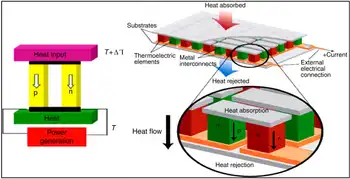
A new approach finds materials that can turn waste heat into electricity
Thermoelectric Materials convert waste heat into electricity via the Seebeck effect; quantum computations and semiconductors…
View more
California's Next Electricity Headache Is a Looming Shortage
California Electricity Reserve Mandate requires 3.3 GW of new capacity to bolster grid reliability amid…
View more

China to build 525-MW hydropower station on Yangtze tributary
Baima Hydropower Station advances China renewable energy on the Wujiang River, a Yangtze tributary in…
View more

Renewable power developers discover more energy sources make better projects
Hybrid renewable energy projects integrate wind, solar, and battery storage to enhance grid reliability, reduce…
View more

Invest in Hydropower to Tackle Coronavirus and Climate Crisis Impacts
Hydropower Covid-19 Resilience highlights clean, reliable energy and flexible grid services, with pumped storage, automation,…
View more
Sign Up for Electricity Forum’s Newsletter
Stay informed with our FREE Newsletter — get the latest news, breakthrough technologies, and expert insights, delivered straight to your inbox.
Electricity Today T&D Magazine Subscribe for FREE

Stay informed with the latest T&D policies and technologies.
- Timely insights from industry experts
- Practical solutions T&D engineers
- Free access to every issue
