High Voltage Maintenance Training Online
Our customized live online or in‑person group training can be delivered to your staff at your location.
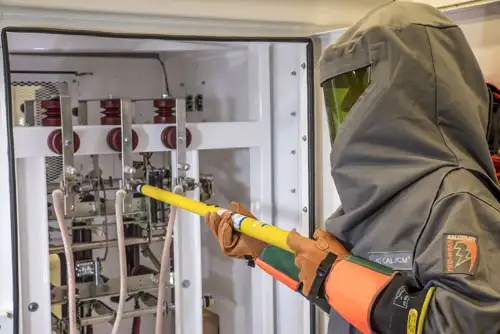
- Live Online
- 12 hours Instructor-led
- Group Training Available
Regular Price:
$599
Coupon Price:
$499
Ireland faces a "serious challenge" in meeting its greenhouse gas emissions target under the Kyoto Protocol, the International Energy Agency (IEA) recently warned.
The West's energy watchdog also expressed concern at the dominance of the state-owned power utility ESB, which it said was hindering greater competition in the electricity sector.
In its four-yearly review of Ireland's energy policies, the IEA said rapid economic growth was behind the growth in greenhouse gas emissions over the past few years but this needed to be tackled as a "matter of urgency."
Under the Kyoto Protocol, the United Nations pact to tackle global warming, Ireland has agreed to limit its greenhouse gas emissions to 13 percent above 1990 levels by 2008 to 2012.
"Emissions grew 24 percent from 1990 levels by 2000 and are believed to have grown substantially since then," the IEA said.
"C02 (carbon dioxide) emissions, which make up over 65 percent of total greenhouse gases, have grown even more, reaching more than 40 percent above 1990 levels in 2001."
Ireland also came under pressure from the IEA to open up its electricity sector to greater competition.
Although ESB has announced plans to cut its market share to 60 percent from 85 percent, the IEA said this was not enough.
"It is welcome but it still leaves the market with a large incumbent player," said Claude Mandil, the IEA's executive director.
"Experience of other countries has shown that markets dominated by one or two companies have been difficult to penetrate. This situation will require monitoring."
Even though the Irish market was the smallest in Europe excluding Luxembourg, more could be done to encourage new entrants, Mandil added.
"Ireland could expand international connections and effectively increase the market size, most obviously through greater regulatory and technical connections with Northern Ireland."
Related News
Nova Scotia Power delays start of controversial new charge for solar customers
Nova Scotia Power solar charge proposes an $8/kW monthly system access fee on net metering…
View more
Coronavirus and the U.S. grid: What to know
COVID-19 Impact on US Electric Grid: utilities, ERCOT, PJM, and MISO brace for load shifts…
View more
N.L., Ottawa agree to shield ratepayers from Muskrat Falls cost overruns
Muskrat Falls Financing Restructuring redirects megadam benefits to ratepayers, stabilizes electricity rates, and overhauls federal…
View more
California Utility Cuts Power to Massive Areas in Northern, Central California
PG&E Public Safety Power Shutoff curbs wildfire risk amid high winds, triggering California outages across…
View more

SaskPower eyes buying $300M worth of electricity from Flying Dust First Nation
SaskPower-Flying Dust flare gas power deal advances a 20 MW, 20-year Power Purchase Agreement, enabling…
View more
China's Path to Carbon Neutrality
China Unified Power Market enables carbon neutrality through renewable integration, cross-provincial electricity trading, smart grid…
View more
Sign Up for Electricity Forum’s Newsletter
Stay informed with our FREE Newsletter — get the latest news, breakthrough technologies, and expert insights, delivered straight to your inbox.
Electricity Today T&D Magazine Subscribe for FREE

Stay informed with the latest T&D policies and technologies.
- Timely insights from industry experts
- Practical solutions T&D engineers
- Free access to every issue

