CSA Z462 Arc Flash Training – Electrical Safety Compliance Course
Our customized live online or in‑person group training can be delivered to your staff at your location.

- Live Online
- 6 hours Instructor-led
- Group Training Available
Regular Price:
$249
Coupon Price:
$199
A recent proposal to beef up state environmental standards could be a boon for Illinois coal.
Gov. Rod Blagojevich announced a mercury pollution plan that would require Illinois power plants to reduce mercury pollution by 90 percent by 2009. While subject to approval by the Illinois Pollution Control Board and a committee of the Illinois General Assembly, the proposal might not just mean cleaner air but more buyers for Illinois coal. That's because Illinois coal has a lower mercury content than low-sulfur western coal used by many utilities across the state. In 2004, Illinois utilities consumed more than 41 million tons of coal. Only 7 million tons of that was Illinois coal. If Illinois accepts the governor's mercury reduction plan, becoming the fourth state in the country to adopt a 90 percent reduction standard, Illinois coal could be a beneficiary, said Massoud Rostam-Abadi, a chemical engineer and head of energy and environmental engineering for the Illinois State Geological Survey in Champaign. Coal production in Illinois has dipped considerably in recent years. "We used to produce over 60 million tons of coal in Illinois up until 1990 (when federal regulations made low-sulfur western coal more attractive)," said Taylor Pensoneau, former president of the Springfield-based Illinois Coal Association. The amount of Illinois coal produced dropped off to 31 million tons in 2003. If scrubbers are employed at power plants to screen pollutants, that might reduce the advantage low-sulfur western coal presently enjoys, said Rostam-Abadi. The problem with removing mercury, so toxic that even low-level exposure can cause learning diabilities and developmental delays in children, is that current means to remove it are expensive, he said. "The cost of removing a pound of mercury from the atmosphere right now is $60,000 while a ton of sulfuric oxide costs just $700 to remove," said Rostam-Abadi. But continued research and upgrades in technology are helping reduce the cost in removing mercury, he said. Others agree technology can help spur a recovery for the Illinois coal industry. "Newer technologies offer tremendous potential for enhancing coal markets for Illinois," said John Mead, director of the Coal Research Center at Southern Illinois University in Carbondale. Gasification plants that convert coal cleanly to a synthetic gas are the wave of the future, he said. Blagojevich announced a $5 million investment in the $1.1 billion Taylorville Energy Center, a gasification project that would use up to 1.8 million tons of Illinois coal annually. A spokesman for the governor's office said groundbreaking for the Taylorville project was set for 2007. "As the governor has said, for coal to be king, it has to be clean," said Bill Hoback, director of the state's Office of Coal Development.
While subject to approval by the Illinois Pollution Control Board and a committee of the Illinois General Assembly, the proposal might not just mean cleaner air but more buyers for Illinois coal.
That's because Illinois coal has a lower mercury content than low-sulfur western coal used by many utilities across the state. In 2004, Illinois utilities consumed more than 41 million tons of coal. Only 7 million tons of that was Illinois coal.
If Illinois accepts the governor's mercury reduction plan, becoming the fourth state in the country to adopt a 90 percent reduction standard, Illinois coal could be a beneficiary, said Massoud Rostam-Abadi, a chemical engineer and head of energy and environmental engineering for the Illinois State Geological Survey in Champaign.
Coal production in Illinois has dipped considerably in recent years. "We used to produce over 60 million tons of coal in Illinois up until 1990 (when federal regulations made low-sulfur western coal more attractive)," said Taylor Pensoneau, former president of the Springfield-based Illinois Coal Association. The amount of Illinois coal produced dropped off to 31 million tons in 2003.
If scrubbers are employed at power plants to screen pollutants, that might reduce the advantage low-sulfur western coal presently enjoys, said Rostam-Abadi.
The problem with removing mercury, so toxic that even low-level exposure can cause learning diabilities and developmental delays in children, is that current means to remove it are expensive, he said.
"The cost of removing a pound of mercury from the atmosphere right now is $60,000 while a ton of sulfuric oxide costs just $700 to remove," said Rostam-Abadi.
But continued research and upgrades in technology are helping reduce the cost in removing mercury, he said.
Others agree technology can help spur a recovery for the Illinois coal industry.
"Newer technologies offer tremendous potential for enhancing coal markets for Illinois," said John Mead, director of the Coal Research Center at Southern Illinois University in Carbondale.
Gasification plants that convert coal cleanly to a synthetic gas are the wave of the future, he said.
Blagojevich announced a $5 million investment in the $1.1 billion Taylorville Energy Center, a gasification project that would use up to 1.8 million tons of Illinois coal annually. A spokesman for the governor's office said groundbreaking for the Taylorville project was set for 2007.
"As the governor has said, for coal to be king, it has to be clean," said Bill Hoback, director of the state's Office of Coal Development.
Related News
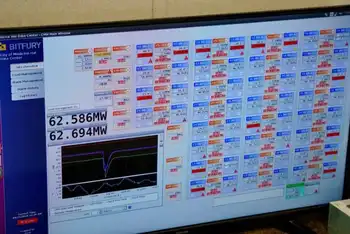
Bitcoin mining uses so much electricity that 1 city could curtail facility's power during heat waves
Medicine Hat Bitcoin Mining Facility drives massive electricity demand and energy use, leveraging natural gas…
View more

Is this the start of an aviation revolution?
Harbour Air Electric Seaplanes pioneer sustainable aviation with battery-electric propulsion, zero-emission operations, and retrofitted de…
View more
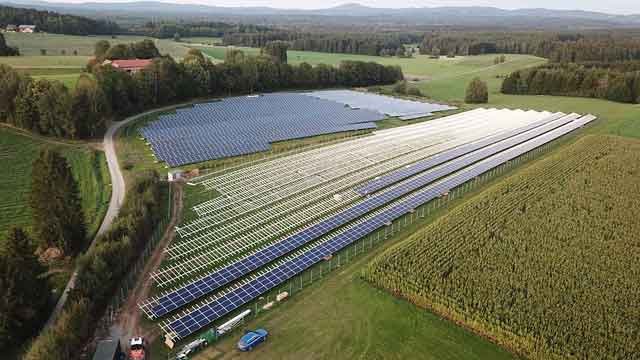
U.S. Speeds Up Permitting for Geothermal Energy
Geothermal Emergency Permitting accelerates BLM approvals on public lands via categorical exclusions for exploratory drilling…
View more
Court reinstates constitutional challenge to Ontario's hefty ‘global adjustment’ electricity charge
Ontario Global Adjustment Charge faces constitutional scrutiny as a regulatory charge vs tax; Court of…
View more
The crisis in numbers: How COVID-19 has reshaped Saskatchewan
Saskatchewan COVID-19 economic impact: real-time data shows drops in electricity demand, oil well licensing, traffic…
View more

Solar-powered pot: Edmonton-area producer unveils largest rooftop solar array
Freedom Cannabis solar array powers an Acheson cannabis facility with 4,574 rooftop panels, a 1,830-kilowatt…
View more
Sign Up for Electricity Forum’s Newsletter
Stay informed with our FREE Newsletter — get the latest news, breakthrough technologies, and expert insights, delivered straight to your inbox.
Electricity Today T&D Magazine Subscribe for FREE

Stay informed with the latest T&D policies and technologies.
- Timely insights from industry experts
- Practical solutions T&D engineers
- Free access to every issue
