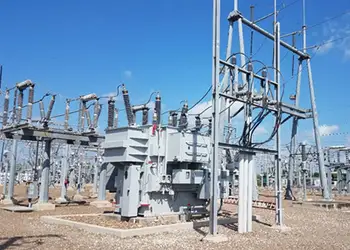
Substation Relay Protection Training
Our customized live online or in‑person group training can be delivered to your staff at your location.
- Live Online
- 12 hours Instructor-led
- Group Training Available
Regular Price:
$699
Coupon Price:
$599
A California city recently asked the state utilities regulator to reconsider its narrow approval of an agreement that clears the way for utility Pacific Gas & Electric Co. to emerge from bankruptcy in the first quarter this year.
The City of Palo Alto said in a petition for rehearing that the California Public Utilities Commission's narrow 3-to-2 approval of the agreement on Dec. 18 violated state laws because the settlement would bind future commissions to terms of the accord, strip the CPUC of its role to set "just and reasonable" electricity rates, and hand regulatory authority to the U.S. Bankruptcy Court.
Palo Alto, which is about 40 miles (65 km) south of San Francisco in Silicon Valley, has operated its own electric utility since 1898. The city buys power from a federal marketing agency that in turn buys electricity from Pacific Gas & Electric, a unit of PG&E Corp..
The settlement deal, which is to run for nine years, was the basis for a plan to reorganize Pacific Gas & Electric that was approved Jan. 5 by Bankruptcy Judge Dennis Montali after a 2 1/2-year case.
The reorganization plan was shaped to earn an investment grade credit rating for the utility, pay $12 billion to creditors, restore dividend payments on the parent company's common stock, and cut $1 billion in costs to utility customers in northern and central California.
CPUC commissioners Loretta Lynch and Carl Wood, who voted against the settlement, and Palo Alto filed notices Dec. 31 to appeal Montali's approval of the plan.
Palo Alto's bid for rehearing at the CPUC will be assigned to the agency's legal staff for review and the regulators have 60 days to act or the petition is regarded as denied.
PG&E spokesman Ron Low said Palo Alto's move was another attempt "to try and delay the resolution of our bankruptcy case and keep our customers from seeing rate reductions that are coming their way."
Low said Palo Alto's arguments in both the bankruptcy court and at the CPUC were rejected.
Lynch and Wood, in papers filed Jan. 9 at the Bankruptcy Court, spelled out appeal issues. Among these are the facts that the plan binds the CPUC in future to financial terms and electricity rates, cedes authority to the court, and requires individual commissioners to support the plan before the legislature or face possible contempt rulings.
PG&E filed for bankruptcy protection in April 2001 at the height of the California energy crisis, a casualty of the state's flawed attempt to deregulate its power market.
Related News

Crucial step towards completing nuclear plant achieved in Abu Dhabi
Barakah Unit 4 Cold Hydrostatic Testing validates reactor coolant system integrity at the Barakah Nuclear…
View more

Canadian Manufacturers and Exporters Congratulates the Ontario Government for Taking Steps to Reduce Electricity Prices
Ontario Global Adjustment Deferral offers COVID-19 electricity bill relief to industrial and commercial consumers not…
View more
Electricity in Spain is 682.65% more expensive than the same day in 2020
Spain Electricity Prices surge to record highs as the wholesale market hits €339.84/MWh, driven by…
View more

In Europe, A Push For Electricity To Solve The Climate Dilemma
EU Electrification Strategy 2050 outlines shifting transport, buildings, and industry to clean power, accelerating EV…
View more
Texas Utilities back out of deal to create smart home electricity networks
Smart Meter Texas real-time pricing faces rollback as utilities limit on-demand reads, impacting demand response,…
View more
California's future with income-based flat-fee utility bills is getting closer
California Income-Based Utility Fees would overhaul electricity bills as CPUC weighs fixed charges tied to…
View more
Sign Up for Electricity Forum’s Newsletter
Stay informed with our FREE Newsletter — get the latest news, breakthrough technologies, and expert insights, delivered straight to your inbox.
Electricity Today T&D Magazine Subscribe for FREE

Stay informed with the latest T&D policies and technologies.
- Timely insights from industry experts
- Practical solutions T&D engineers
- Free access to every issue
