Protective Relay Training - Basic
Our customized live online or in‑person group training can be delivered to your staff at your location.

- Live Online
- 12 hours Instructor-led
- Group Training Available
Regular Price:
$699
Coupon Price:
$599
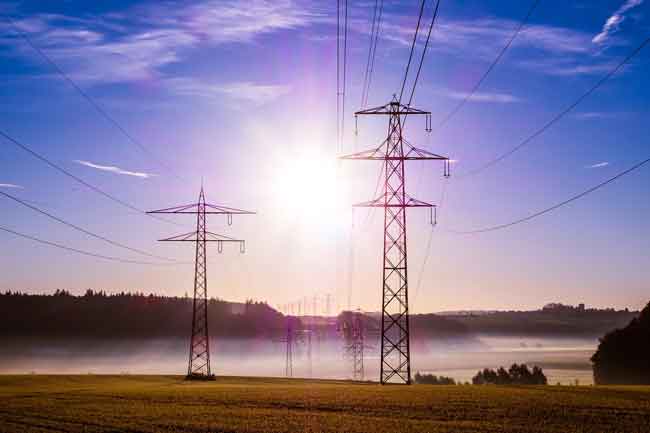
New Zealand property owners are continuing to plant large-growing trees near - and even under - power lines, according to Taranaki-based power company Powerco.
Not only is it potentially dangerous, but trees near power lines are often the cause of power cuts, Powerco network operations manager Ross Dixon said.
He made his comments as vegetation management company Asplundh Tree Expert (NZ) Ltd began work removing trees in danger of touching 33,000kV lines on the southern outskirts of New Plymouth.
Burn marks on the top branches of the pine trees indicated they had touched the lines in windy conditions, causing arcing, Asplundh's Taranaki contract manager Kevin Low said.
"So what we're doing is using special equipment to take the trees right down to stump level," he said.
Mr Low said his team was constantly removing trees growing dangerously close to power lines.
"It's a big problem. Property owners are still planting the wrong types of trees below power lines."
Mr Dixon said there were many smaller trees and shrubs suitable for planting near overhead lines that provided shelter.
These included natives such as flax, akeake and manuka, and exotics such as birch, Japanese maple, camellia and hibiscus.
Related News
PG&E Rates Set to Stabilize in 2025
PG&E 2024 Rate Hikes signal sharp increases to fund wildfire safety, infrastructure upgrades, and CPUC-backed…
View more

America’s Electricity is Safe From the Coronavirus—for Now
US Grid Pandemic Response coordinates control rooms, grid operators, and critical infrastructure, leveraging hydroelectric plants,…
View more
Canada's looming power problem is massive but not insurmountable: report
Canada Net-Zero Electricity Buildout will double or triple power capacity, scaling clean energy, renewables, nuclear,…
View more
Texas Weighs Electricity Market Reforms To Avoid Blackouts
Texas PUC Electricity Market Reforms aim to boost grid reliability, support ERCOT resilience, pay standby…
View more

Ontario Providing Electricity Relief to Families, Small Businesses and Farms During COVID-19
Ontario TOU Electricity Rate Relief offers 24/7 fixed off-peak pricing at 10.1¢/kWh, suspending time-of-use tiers…
View more

Germany shuts down its last three nuclear power plants
Germany Nuclear Phase-Out ends power generation from reactors, prioritizing energy security, renewables, and emissions goals…
View more
Sign Up for Electricity Forum’s Newsletter
Stay informed with our FREE Newsletter — get the latest news, breakthrough technologies, and expert insights, delivered straight to your inbox.
Electricity Today T&D Magazine Subscribe for FREE

Stay informed with the latest T&D policies and technologies.
- Timely insights from industry experts
- Practical solutions T&D engineers
- Free access to every issue
