Substation Relay Protection Training
Our customized live online or in‑person group training can be delivered to your staff at your location.
- Live Online
- 12 hours Instructor-led
- Group Training Available
Regular Price:
$699
Coupon Price:
$599
The state's tough new utility law, which allows companies to more easily shut off service to customers, was both unnecessary and harmful, according to a report from a former state Public Utility Commission member.
Joseph Rhodes Jr. has called for speedy repeal of the law, known as Chapter 14. In his report to state Rep. Dwight Evans, D-Philadelphia, who had asked Rhodes to investigate, Rhodes criticized the law on both historic and practical grounds.
The state Legislature usurped the traditional role of the PUC in regulating utility connections and caused thousands more low-income households to be without heat going into the winter, he also reported.
The utility industry had argued that changes in existing law were needed because too many people were gaming the system to avoid paying utility bills. Evans initially supported the changes, but he later asked Rhodes to investigate after concerns were raised that the law was too harsh.
"[Chapter 14] was a hasty mistake," said Rhodes, who served on the PUC from 1988 to 1995. "It was a solution looking for a problem that did not exist. There was no collections problem."
He recommended that the law be repealed and that the state "go back to letting the PUC regulate terminations and reconnections."
To do that, reform or repeal supporters would have to get a bill through the Legislature. Attempts to do so failed last year, mainly because state Sen. Robert Tomlinson, R-Bucks, insisted on holding hearings first. A spokeswoman for Tomlinson said nothing has been scheduled so far.
Some state legislators, including Sen. Jake Corman, R-Centre, oppose reforming the law.
Michael Love, director of the Energy Association of Pennsylvania, which is criticized in the report, attacked Rhodes for bias.
"He never looked at this objectively," Love said. "His bias going in was that he was against this law and wanted it repealed."
Rhodes said Love is entitled to his opinion. "From the beginning, I had concerns," he said. "This was such a radical change."
As part of his investigation, Rhodes asked the Energy Association to provide him with data showing that Chapter 14 was both necessary and effective.
The association argued that the tough provisions in the law greatly helped with collecting delinquent utility bills. About 86,000 of the utility customers who had their electricity shut off in 2005 found the money to pay their bills and get reconnected, it has said.
Rhodes said a study done last year by the National Energy Assistance Directors Association found that 73 percent of heating- assistance recipients reported that they reduced spending on household necessities, such as food and medicine, to pay their heating bills.
"To jump to the conclusion that these thousands of households were deadbeats is the height of insensitivity on the part of the [Energy Association]," Rhodes said. "These results establish that [Chapter 14] was a 'big stick,' not that it was used on deadbeats alone."
He said the 86,000 households mentioned by the Energy Association may well have "merely shifted their misery from one category to another."
Rhodes said Chapter 14 gives utilities "almost total command" over service terminations and reconnections, removing the PUC from the picture in many instances.
"We have a Public Utility Code because, when we are talking about the provision of essential services on a monopoly basis, we cannot simply trust that the utility will do the right thing," he said.
Related News
California Considers Revamping Electricity Rates in Bid to Clean the Grid
California Electricity Rate Overhaul proposes a fixed fee and lower per-kWh rates to boost electrification,…
View more

Construction of expanded Hoa Binh Hydropower Plant to start October 2020
Expanded Hoa Binh Hydropower Plant increases EVN capacity with 480MW turbines, commercial loan financing, grid…
View more
Electricity exports to New York from Quebec will happen as early as 2025: Hydro-Quebec
Hertel-New York Interconnection delivers Hydro-Quebec renewable energy via a cross-border transmission line to New York…
View more
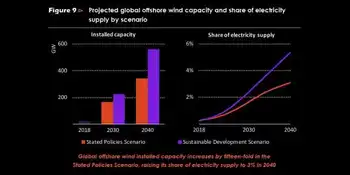
Offshore wind is set to become a $1 trillion business
Offshore wind power accelerates low-carbon electrification, leveraging floating turbines, high capacity factors, HVDC transmission, and…
View more
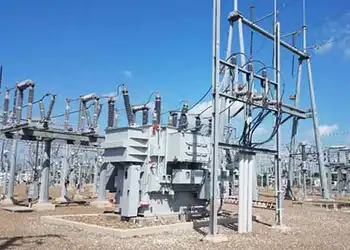
New EPA power plant rules will put carbon capture to the test
CCUS in the U.S. Power Sector drives investments as DOE grants, 45Q tax credits, and…
View more
Ontario Providing Support for Industrial and Commercial Electricity Consumers During COVID-19
Ontario Global Adjustment Deferral provides COVID-19 relief to industrial and commercial electricity consumers, holding GA…
View more
Sign Up for Electricity Forum’s Newsletter
Stay informed with our FREE Newsletter — get the latest news, breakthrough technologies, and expert insights, delivered straight to your inbox.
Electricity Today T&D Magazine Subscribe for FREE

Stay informed with the latest T&D policies and technologies.
- Timely insights from industry experts
- Practical solutions T&D engineers
- Free access to every issue

