CSA Z462 Arc Flash Training – Electrical Safety Compliance Course
Our customized live online or in‑person group training can be delivered to your staff at your location.

- Live Online
- 6 hours Instructor-led
- Group Training Available
Regular Price:
$249
Coupon Price:
$199
Exploding at the seams with building, investment and trade, India can hardly keep up with itself. City streets originally built for two lanes of traffic are teeming with four and sometimes five lanes of cars, auto-rickshaws, mopeds, buses and trucks. This energy-guzzling congestion will only become worse as India continues producing fairly high-quality goods and services at lower and lower prices from automobiles that cost only $2,500 to low-budget airline flights for $50.
India's president, A.P.J. Abdul Kalam, sounded exactly like President George W. Bush when he told the Asiatic Society in Manila earlier this month that energy independence must be India's highest priority. "We must be determined to achieve this within the next 25 years, that is, by the year 2030," he said. Unfortunately, Kalam, like Bush, is far better at talking than at any real action to reduce energy consumption. When Bush makes his long-planned trip to India next month, he will be visiting a country that, like China, has begun to gear its international strategy to its energy needs. That is one of the biggest diplomatic challenges facing the United States, and right now the American strategy is askew.
India desperately wants Bush to wring approval from Congress for a misbegotten pact in which America would help meet India's energy requirements through civilian nuclear cooperation. With its eye on the nuclear deal, India recently bowed to American pressure and cast its vote at the International Atomic Energy Agency to refer Iran's suspected nuclear program to the UN Security Council.
That was a victory for Bush, and India did the right thing in helping to hold Iran accountable. But the deal it wants to make with the United States is a bad one. It would allow India to make an end run around the Nuclear Nonproliferation Treaty's basic bargain, which rewards countries willing to renounce nuclear weapons with the opportunity to import sensitive nuclear technology to help meet their energy needs. America has imposed nuclear export restrictions on India because India refuses to sign the nonproliferation treaty and it has tested a nuclear device that uses materials and technology diverted from its civilian nuclear program.
In trying to give India a special exemption, Bush is threatening the nonproliferation treaty's carrot-and-stick approach, which for more than 35 years has dissuaded countries that are capable of building or buying nuclear arms from doing so, from South Korea to Turkey to Saudi Arabia. And if his hope is that the promise of nuclear technology from America will be enough to prod India to turn its back on Iran, that's a bad bet. Even as India was casting its vote on Iran's nuclear program, India's petroleum minister, Murli Deora, said his government would continue to pursue a multibillion- dollar gas pipeline deal with Tehran.
There is no diplomatic quick fix in this energy-hungry world. Even if India shunned Iran, it would still have to turn to other petroleum suppliers that Washington wants to isolate, including Sudan and Venezuela. And the Iranian supplies would wind up going to other energy-hungry nations, tying them more closely to Tehran.
If Bush wants to tackle this quandary seriously, he needs to begin by pushing for significant energy conservation steps in the United States, by far the world's largest energy consumer. That would do far more to weaken the stranglehold Iran and other energy-producing nations now exercise over world oil markets.
Related News
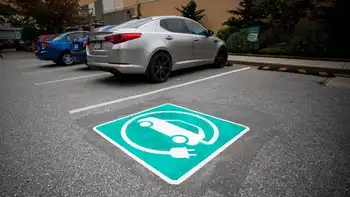
If B.C. wants to electrify all road vehicles by 2055, it will need to at least double its power output: study
B.C. EV Electrification 2055 projects grid capacity needs doubling to 37 GW, driven by electric…
View more
Energy minister unveils Ontario's plan to address growing energy needs
Powering Ontario's Growth accelerates clean electricity, pairing solar, wind, and hydro with energy storage, efficiency…
View more
KHNP is being considered for Bulgarian Nuclear Power Plant Project
KHNP Shortlisted for Belene Nuclear Power Plant, named by the Bulgarian Energy Ministry alongside Rosatom…
View more
Europe Is Losing Nuclear Power Just When It Really Needs Energy
Europe's Nuclear Energy Policy shapes responses to the energy crisis, soaring gas prices, EU taxonomy…
View more
"Kill the viability": big batteries to lose out from electricity grid rule change
AEMC Storage Charging Rules spark industry backlash as Tesla, Snowy Hydro, and investors warn transmission…
View more
Wind turbine firms close Spanish factories as Coronavirus restrictions tighten
Spain Wind Turbine Factory Shutdowns disrupt manufacturing as Vestas, Siemens Gamesa, and Nordex halt Spanish…
View more
Sign Up for Electricity Forum’s Newsletter
Stay informed with our FREE Newsletter — get the latest news, breakthrough technologies, and expert insights, delivered straight to your inbox.
Electricity Today T&D Magazine Subscribe for FREE

Stay informed with the latest T&D policies and technologies.
- Timely insights from industry experts
- Practical solutions T&D engineers
- Free access to every issue
