Substation Relay Protection Training
Our customized live online or in‑person group training can be delivered to your staff at your location.
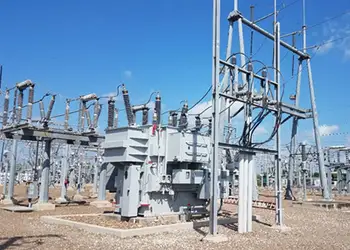
- Live Online
- 12 hours Instructor-led
- Group Training Available
Regular Price:
$699
Coupon Price:
$599
An obscure provision from last spring's Ontario budget is about to land on the electricity bills of householders and businesses.
Householders are likely to pay another $24 to $30 a year for power, according to one estimate, to cover the cost of about 90 long-term contracts that Ontario Hydro signed in the 1990s to buy power from private generators.
The amount won't show up as a separate line on consumers' power bills, as it will be blended with other components of the bill into the regulated consumer price.
Ontario Hydro signed the long-term contracts with private generators for prices that turned out to be higher than current market rates. In the year ended March 31, 2004, for example, the power cost the provincial purse $797 million, but it could be sold on the market for only $510 million — a loss to taxpayers of $287 million.
The average length remaining on the contracts is 15 years.
Because the electricity has cost the public more than market value, the contracts have been valued as a liability of $3.9 billion on the government's books. But in its budget last spring, the Liberal government wiped the liability from its own books and placed it on the shoulders of electricity consumers.
The move, criticized as an accounting trick by Opposition parties, trimmed $3.9 billion from the government deficit for the year.
But the liability didn't disappear. Taxpayers no longer have to bear the losses, but electricity consumers do.
January marks the first month when the new obligation comes due on power bills, so local utilities and large businesses who buy power on the wholesale market are likely to see an amount show up on this month's statements.
According to one analyst's calculation, it will cost about $375 million a year to eliminate the liability over 15 years.
That translates into an increase of about 0.25 of a cent a kilowatt hour — or $2.50 a month on a typical household electricity bill of 1,000 kilowatt hours. That's $30 a year.
If the shortfall to be made up is more on the order of the $287 million loss rung up in 2004, the cost would be closer to 0.2 cent a kilowatt hour, or $24 a year.
Consumers won't see the cost spelled out on their bills, however. Any losses stemming from the contracts will be blended in with other factors in the soon-to-be-announced regulated price for small consumers.
The wisdom of signing long-term agreements is likely to surface again with the creation of the Ontario Power Authority, the new provincial agency with a mandate to secure future power supplies by negotiating long-term purchase contracts if necessary.
Defenders of the contracts say they are a means of delivering a reliable supply of power at stable prices.
Related News

Power Demand Seen Holding Firm In Europe’s Latest Lockdown
European Power Demand During Second Lockdowns remains resilient as winter heating offsets commercial losses; electricity…
View more

Alberta creates fund to help communities hit by coal phase-out
Alberta Coal Community Transition Fund backs renewables, natural gas, and economic diversification, offering grants, workforce…
View more

Maritime Electric team works on cleanup in Turks and Caicos
Maritime Electric Hurricane Irma Response details utility crews aiding Turks and Caicos with power restoration,…
View more
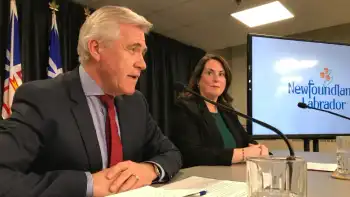
Lump sum credit on electricity bills as soon as July
NL Hydro electricity credit delivers a one-time on-bill rebate from the rate stabilization fund, linked…
View more
Manitoba's electrical demand could double in next 20 years: report
Manitoba Hydro Integrated Resource Plan outlines electrification-driven demand growth, clean electricity needs, wind generation, energy…
View more
N.B. Power hits pause on large new electricity customers during crypto review
N.B. Power Crypto Mining Moratorium underscores electricity demand risks from bitcoin mining, straining the energy…
View more
Sign Up for Electricity Forum’s Newsletter
Stay informed with our FREE Newsletter — get the latest news, breakthrough technologies, and expert insights, delivered straight to your inbox.
Electricity Today T&D Magazine Subscribe for FREE

Stay informed with the latest T&D policies and technologies.
- Timely insights from industry experts
- Practical solutions T&D engineers
- Free access to every issue
