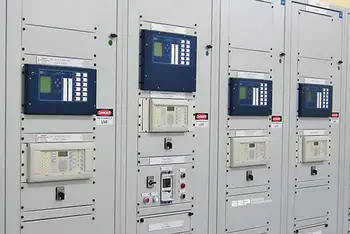
Protective Relay Training - Basic
Our customized live online or in‑person group training can be delivered to your staff at your location.
- Live Online
- 12 hours Instructor-led
- Group Training Available
Regular Price:
$699
Coupon Price:
$599
SAN FRANCISCO —
The nuclear power industry may find its revival in space — on the way to Jupiter.=
Development of nuclear energy has been stymied for decades on Earth because of high costs, the fear of another accident like those at Three Mile Island or Chernobyl, and the problem of how to deal with radioactive waste. But NASA and planetary scientists see it as opening a new era of research in space by providing a plentiful power source for deep space probes, which has been lacking so far.
"This is an unprecedented opportunity for exploration," said Dr. Ronald Greeley, a professor of geological sciences at the Arizona State University. Dr. Greeley is co-leader of a team of 38 scientists who have been working with NASA since February 2003 to define what kind of science could be pursued by a nuclear-powered spacecraft at Jupiter.
The proposed spacecraft, the Jupiter Icy Moons Orbiter, would be able to carry new and more powerful instruments and would be able to move in and out of orbit of different Jovian moons.
The team of scientists presented its recommendations at a meeting of the American Geophysical Union here last week. Still in the preliminary planning stages, Jimo would cost several billion dollars, which includes developing a space-worthy nuclear reactor. The earliest launch date would be 2011, and, Dr. Greeley said, "None of us will be surprised if it launches later than 2011."
Jimo would also have to overcome concerns about what could happen in case of an accident.
As many as 1 in 10 rocket launches still fail, opening the possibility of a nuclear reactor exploding high in the atmosphere and dispersing radioactive material. "As you introduce more nuclear power into space missions, you're looking for trouble," said Bruce K. Gagnon, coordinator of the Global Network Against Weapons and Nuclear Power in Space.
A space probe like Jimo would also be "an icebreaker to institutionalize nuclear power in space," Mr. Gagnon said. "Later it would be used for military purposes" like powering space-based lasers, he said.
NASA officials said the nuclear reactor would not be turned on until after the spacecraft reaches orbit and that safety would be a primary design concern. The nuclear fuel will be designed not to break up even if the rocket explodes.
The appeal of a small nuclear power generator for propulsion in space is that power becomes more precious with distance from the Sun. In the outer solar system, sunlight is too dim for solar panels and technologies like fuel cells are not reliable enough for the years-long voyage to distant plants. Until now, NASA has used hunks of radioactive plutonium that generate heat as they decay, and the heat is converted into modest amounts of electricity.
NASA's Galileo spacecraft, which in September concluded a hugely successful 14-year mission with a deliberate plunge into Jupiter, subsisted on an electrical diet of a few hundred watts — which would light up a handful of light bulbs.
That was still enough for Galileo to produce a wealth of discoveries, especially about Europa, one of Jupiter's moons. Cameras captured up-close images of Europa's exquisitely cracked crust of ice, and magnetic field measurements indicated that beneath that ice is a layer of electrically conductive material — what planetary scientists believe is a liquid ocean and possibly the most likely place in the solar system to find life. Because Galileo had only small maneuvering thrusters, it could not enter orbit around any of the moons. Galileo's brief flights past Europa produced high-resolution images of less than 0.1 percent of the surface.
With nuclear propulsion, mission controllers would be able to drop into orbit around one moon for several months, then restart the engine to propel the probe to the next destination. "You are in the driver's seat," said Raynor L. Taylor, program executive for icy moons orbiter project. "You can control where you can go."
Related News

BC Hydro rebate and B.C. Affordability Credit coming as David Eby sworn in as premier
BC Affordability & BC Hydro Bill Credits provide inflation relief and cost of living support,…
View more

Minister approves 30-megawatt wind farm expansion in Eastern Kings
Eastern Kings Wind Farm Expansion advances P.E.I. renewable energy with seven new wind turbines, environmental…
View more
Philippines Reaffirms Clean Energy Commitment at APEC Summit
Philippines Clean Energy Commitment underscores APEC-aligned renewables, energy transition, and climate resilience, backed by policy…
View more
Energy Department Announces 20 New Competitors for the American-Made Solar Prize
American-Made Solar Prize Round 3 accelerates DOE-backed solar innovation, empowering entrepreneurs and domestic manufacturing with…
View more
Schott Powers German Plants with Green Electricity
Schott Green Electricity CPPA secures renewable energy via a solar park in Schleswig-Holstein, supporting decarbonization…
View more
Clean-energy generation powers economy, environment
Atlin Hydro and Transmission Project delivers First Nation-led clean energy via hydropower to the Yukon…
View more
Sign Up for Electricity Forum’s Newsletter
Stay informed with our FREE Newsletter — get the latest news, breakthrough technologies, and expert insights, delivered straight to your inbox.
Electricity Today T&D Magazine Subscribe for FREE

Stay informed with the latest T&D policies and technologies.
- Timely insights from industry experts
- Practical solutions T&D engineers
- Free access to every issue
