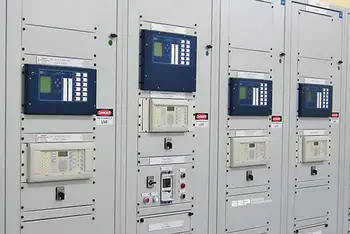
Protective Relay Training - Basic
Our customized live online or in‑person group training can be delivered to your staff at your location.
- Live Online
- 12 hours Instructor-led
- Group Training Available
Regular Price:
$699
Coupon Price:
$599
A national program that for more than a decade has made federal buildings more energy-efficient and saved the government millions of dollars is trapped in limbo, its future tied to the stalled energy bill.
The program, which totaled $1.3 billion worth of projects in the past five years, allows private companies to install energy- efficiency upgrades in government buildings at no cost to taxpayers. The private-public partnership benefits the federal government, which pays no upfront fees, and the contractors, who are reimbursed with the savings the facilities accrue after the upgrades.
The program was created by Congress as a temporary measure, and the federal government's authority to enter the contracts expired in September 2003.
A provision added to the comprehensive energy bill would reinstate the program permanently, but the controversial bill was blocked by a November filibuster in the Senate.
Work can continue on contracts signed before the end of September, but more than 50 projects for more than $300 million are on hold until Congress renews the program.
The Energy Savings Performance Contracts represent "a win-win situation," said Doug Sattler of Cogenex, a company whose project to upgrade Chicago's Social Security Administration building on Madison Street is frozen.
The $1 million project to improve lighting, heating and cooling systems would have cut energy costs by more than $180,000 in the first year, Sattler said.
Improvement projects generally involve anything from replacing light bulbs to updating boilers.
Mark Wagner of Johnson Controls, another contractor, said that although his company's $2.3 million initial project at Argonne National Laboratory in Illinois is under way, negotiations for further energy upgrades are blocked until the program is reapproved.
Work in progress at Argonne includes upgrades to lighting, heating and ventilation systems that are expected to cut energy bills by about $312,000 a year, Wagner said.
Energy upgrades can save government buildings, military offices and hospitals 15 percent to 25 percent a year on electricity bills, Wagner said.
The cuts are welcomed by the private sector, taxpayers, environmentalists and the federal government, which is the largest electricity consumer in the United States, said Kara Saul Rinaldi, director of policy at the Alliance to Save Energy.
According to a 1998 study by that group, the government wastes more than $1 billion every year through inefficient energy use.
"Tax dollars are going out federal windows," Rinaldi said.
Congress approved the energy-efficiency program in the early 1990s and gave it a five-year trial. The program, which was renewed in 1997 for a another five years, requires congressional approval because its contracts commit the government to future payments.
Government officials recognize the value of the program.
"Getting money to do projects, even ones that aren't so big, is not an easy thing," said one government building manager who asked not to be named.
"When you can pull the stuff together," he said, "you'll get the savings."
Related News
Rising Solar and Wind Curtailments in California
California Renewable Energy Curtailment highlights grid congestion, midday solar peaks, limited battery storage, and market…
View more
Doug Ford's New Stance on Wind Power in Ontario
Ontario Wind Power Policy Shift signals renewed investment in renewable energy, wind farms, and grid…
View more

3 Reasons Why Cheap Abundant Electricity Is Getting Closer To Reality
Renewable Energy Breakthroughs drive quantum dots solar efficiency, Air-gen protein nanowires harvesting humidity, and cellulose…
View more
BC Hydro Rates to Rise by 3.75% Over Two Years
British Columbia electricity rate increase will raise BC Hydro bills 3.75% over 2025-2026 to fund…
View more
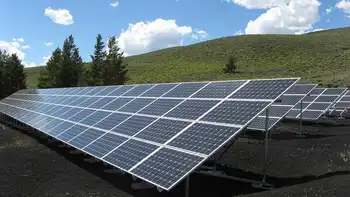
In 2021, 40% Of The Electricity Produced In The United States Was Derived From Non-Fossil Fuel Sources
Renewable Electricity Generation is accelerating the shift from fossil fuels, as wind, solar, and hydro…
View more

Taiwan's economic minister resigns over widespread power outage
Taiwan Power Blackout disrupts Taipei and commercial hubs after a Taoyuan natural gas plant error,…
View more
Sign Up for Electricity Forum’s Newsletter
Stay informed with our FREE Newsletter — get the latest news, breakthrough technologies, and expert insights, delivered straight to your inbox.
Electricity Today T&D Magazine Subscribe for FREE

Stay informed with the latest T&D policies and technologies.
- Timely insights from industry experts
- Practical solutions T&D engineers
- Free access to every issue
