NFPA 70b Training - Electrical Maintenance
Our customized live online or in‑person group training can be delivered to your staff at your location.

- Live Online
- 12 hours Instructor-led
- Group Training Available
Regular Price:
$699
Coupon Price:
$599
The Canadian government has committed hundreds of millions of dollars to renewable energy, based on
official forecasts which shows that renewables will drop during the next two decades.
In June, the federal energy department released a trilateral report with the governments of the United States and Mexico, showing that generation from non-hydro renewables in Canada would drop from 6 TWh to 2 TWh by 2010, says the Canadian Association for Renewable Energies. The group asked for clarification of the forecast, and for a comprehensive analysis of the capacity and potential of wind, PV, hydro, tidal, ocean, geothermal, earth energy, solar thermal and biomass energy in Canada, including 10-year and 25-year projections.
Data obtain under Access to Information legislation confirmed that the federal government had based its forecast on reports which indicate that wind-generated output in Canada would drop after 2010, while biomass would drop after 2010. The government recently launched a CDN$260 million production incentive for wind power, although an official report provided to the International Energy Agency says Canada has no national target for wind energy nor for renewable energies, nor any national wind energy deployment targets.
"The paper-trail provided by NRCan (and confirmed under ATIP legislation) indicates inconsistencies, contradictions and deficiencies in policies to support renewable energies in Canada," says the association. "If the federal and provincial governments are increasing their support for renewables despite official predictions of significant negative growth, Canadians could anticipate that support would be stronger, more coherent and more strategic if these official predictions indicated positive growth."
The energy department did form an internal working group to collect renewable energy data, but the figures remain confidential and do not forecast the consumption of renewables beyond 2002. The association has urged the government to develop the framework necessary to promote renewables in Canada and to establish set targets or strategies as most other countries have set.
"There is a risk that, in the absence of data which predict positive growth, government's commitment to renewables could be undermined by reliance on internal predictions that renewables will diminish," it warns.
"Also, support may be withheld from feasible green technologies under a scenario of negative data and no strategy."
The association said it is "most concerned that the application (or perceived application) of ad hoc or unsubstantiated policy measures may endanger public support for renewable energy technologies in Canada ... at a time when public support is critical."
CARE stressed that the collection and dissemination of data on renewables becomes important in the debate over Canada's ratification of the Kyoto Protocol and "the GHG reduction targets to which renewables can make a significant contribution."
Related News
There's a Russia-Sized Mystery in China's Electricity Sector
China Power Demand-Emissions Gap highlights surging grid demand outpacing renewables, with coal filling shortages despite…
View more
EU Plans To Double Electricity Use By 2050
European Green Deal Electrification accelerates decarbonization via renewables, electric vehicles, heat pumps, and clean industry,…
View more
Iran supplying 40% of Iraq’s need for electricity
Iran Electricity Exports to Iraq address power shortages and blackouts, supplying 1,200-1,500 MW and gas…
View more
Covid-19 crisis hits solar and wind energy industry
COVID-19 Impact on US Renewable Energy disrupts solar and wind projects, dries up tax equity…
View more

27,000 Plus More Clean Energy Jobs Lost in May
U.S. Clean Energy Job Losses highlight COVID-19 impacts on renewable energy, solar, wind, and energy…
View more
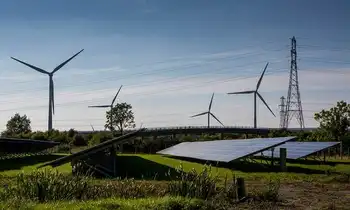
Wind and solar make more electricity than nuclear for first time in UK
UK Renewables Surpass Nuclear Milestone as wind farms and solar panels outpace atomic output, cutting…
View more
Sign Up for Electricity Forum’s Newsletter
Stay informed with our FREE Newsletter — get the latest news, breakthrough technologies, and expert insights, delivered straight to your inbox.
Electricity Today T&D Magazine Subscribe for FREE

Stay informed with the latest T&D policies and technologies.
- Timely insights from industry experts
- Practical solutions T&D engineers
- Free access to every issue
