Substation Protection Training - Protect Transformers, Buses and Lines
Our customized live online or in‑person group training can be delivered to your staff at your location.
- Live Online
- 12 hours Instructor-led
- Group Training Available
Regular Price:
$799
Coupon Price:
$699
If you think your electric bill was high this summer, wait till next year.
The U.S. Energy Department predicts that the average residential electricity bill will rise about 10% in 2009 after a 5% increase this year. Of course, those are not spread out evenly across the board, with costs varying from state to state - and sometimes city to city - based on a slew of factors.
Consumers throughout the Northeast have seen their rates rise dramatically in recent years due to the effects of de-regulation of the utility market there. Dense population and lack of new power lines and infrastructure to meet the region's energy demands also play a part in the higher cost.
Among the most expensive states in which to purchase electricity are Massachusetts, New York, Connecticut, Rhode Island and New Hampshire, according to the Department of Energy. To avoid sudden rate increases from deregulation, Maine's public utilities commission has even proposed becoming an "electricity island" separate from the rest of the Northeast - one that gets its power from Canada instead.
Hawaii is the most expensive state, though that comes as no surprise. Many goods and services are more expensive in the state due to its sheer isolation from the mainland and the costs involved in delivering goods and services. Alaska has high electricity costs as well, for similar reasons.
Part of the surge in certain states has to do with the surging cost of commodities - whether coal, natural gas or oil - that are used to create electricity. For instance, Hawaii paid the highest rate last year not just because of its distance from the mainland, but also because it primarily uses oil, one of the more expensive commodities. On the other hand, Idaho, which uses cheap hydroelectric power, had the cheapest electricity, and other coal-producing states like West Virginia and Kentucky have consistently lower rates.
Other factors that affect pricing range from power outages and maintenance to weather conditions and simple supply and demand - the only factor that consumers can control.
Certain states have also seen prices rise recently as so-called "rate freezes" expired and utilities attempted to make up for lost time. Those freezes were put in place by the government to control power costs, but didn't factor in surging commodity costs down the road.
Some Maryland electric bills rose as much as 72% in 2006 due to that trend, hurting consumers and businesses alike. More residential customers have been asking for assistance to pay utility bills, and some businesses relocated, held off on expansion or simply closed up shop, hurting local economies.
States like Pennsylvania and Ohio, which are facing similar rate-freeze expirations, have worked out plans to phase in higher rates over time or include regulated power and renewables in the mix to ease the pain of rate hikes.
The point of deregulating the power market was to provide more choices for consumers, with the belief that strong competition would lower prices. But even Texas, whose deregulation was once hyped as the perfect example of the free market at work, with more than 100 power companies operating in the state, is now facing surging electricity prices as well.
Before deregulation in 2002, Texas was among the least-costly states for power purchases. Now, as many small power producers have gone bankrupt, the cost for some consumers has become the most expensive in the nation. Regulators have also accused the state's largest utility, TXU Energy, of manipulating the power markets to bilk consumers out of $70 million dollars.
It was once believed that de-regulation would lead to greater efficiency and improvement of aging infrastructure - new plants, more transmission lines and better service. But that hasn't happened either, due to the high costs of building such infrastructure, combined with the NIMBYism of many Americans who don't want power lines and power plants being built across their neighborhoods. These factors provide little incentive for power producers who can increase profits with the infrastructure they already have.
"This was supposed to promote the construction of new power plants. Well, that hasn't happened," says Mark Crisson, president and CEO of the American Public Power Association, a nonprofit group that represents local public utilities. "All it does is transfer money from the consumer to these 10 or 12 companies that have been doing very well in recent years."
Crisson predicts more pain ahead if nothing is done to alleviate the rapid increase of electricity prices in dozens of deregulated states. The trend could hurt utilities, which are coping with high commodity costs, as well as promises of stricter emissions regulation from lawmakers and both presumptive presidential candidates.
"If prices get too high, you don't just have price response you have demand destruction," Crisson says. "Companies start to shut down, customers can't pay their bill, it starts having a major drag on the economy - it's just no good."
While the Energy Department predicts that electricity prices will peak in 2009 at 9.3 cents per kilowatt hour, there are no guarantees. Its projections have assumptions about commodity mix, renewables, costs and infrastructure that, of course, aren't certain.
Some utilities offer "demand management" programs to encourage use of electricity during off-peak times, or will seasonally adjust bills to spread out the high summer prices over the full year.
But such programs don't guarantee lower prices either. For the time being, consumers can only lower their bills by conserving energy: So, it might be best to turn off the power-sucking air conditioners and opt for more efficient appliances and bulbs.
Related News
Hydro once made up around half of Alberta's power capacity. Why does Alberta have so little now?
Alberta Hydropower Potential highlights renewable energy, dams, reservoirs, grid flexibility, contrasting wind and solar growth…
View more
Iraq plans nuclear power plants to tackle electricity shortage
Iraq Nuclear Power Plan targets eight reactors and 11 GW to ease blackouts, curb emissions,…
View more
British Columbia Halts Further Expansion of Self-Driving Vehicles
BC Autonomous Vehicle Ban freezes new driverless testing and deployment as BC develops a regulatory…
View more

Canadian gold mine cleans up its act with electricity
Electric mining equipment enables zero-emission, diesel-free operations at Goldcorp's Borden mine, using Sandvik battery-electric drills…
View more
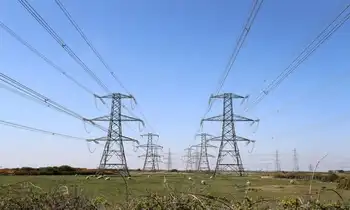
National Grid warns of short supply of electricity over next few days
National Grid power supply warning highlights electricity shortage risks amid low wind output, generator outages,…
View more
California electricity pricing changes pose an existential threat to residential rooftop solar
California Rooftop Solar Rate Reforms propose shifting net metering to fixed access fees, peak-demand charges,…
View more
Sign Up for Electricity Forum’s Newsletter
Stay informed with our FREE Newsletter — get the latest news, breakthrough technologies, and expert insights, delivered straight to your inbox.
Electricity Today T&D Magazine Subscribe for FREE
Stay informed with the latest T&D policies and technologies.
- Timely insights from industry experts
- Practical solutions T&D engineers
- Free access to every issue
