NFPA 70E Training
Our customized live online or in‑person group training can be delivered to your staff at your location.

- Live Online
- 6 hours Instructor-led
- Group Training Available
Regular Price:
$199
Coupon Price:
$149
In some ways, they are still fumbling about in the dark, except now at least there's a flashlight on hand.
A year after a massive power blackout dimmed lights across eight states in the Midwest and Northeast and parts of eastern Canada, leaving some 50 million people in the dark, Congress has yet to push through mandatory rules on the reliability of the electric system that everyone has been clamoring for.
Instead, while everyone from utilities to politicians shake their heads over the lack of such rules, a few voluntary measures have started turning up the heat on utilities.
Key among them are reliability audits of all major system operators that are designed to pinpoint problems before they occur and the results of which are made public. The audits, conducted by the North American Electric Reliability Council (NERC), a utility industry group, will be conducted over three years and several were completed over the summer, Ellen Vancko, a spokeswoman for the group, said.
Given the lack of mandatory reliability rules, such audits have assumed greater significance, some analysts say.
"The one major change you can point to is that federal regulators have gotten NERC moving in terms of trying to recreate incentives for reliability being job one for utilities," said Greg Williams, a Bracewell and Patterson lawyer who focuses on utility regulation. "The job is not finished, but it has begun."
Since the blackout, monitoring and reliability of the U.S. grid has improved, along with some operator training problems that were blamed for the event, a joint U.S.-Canadian government panel said in a recent report.
"The aggregate result of these actions has been to reduce significantly the risk of future blackouts, even though that risk can never be eliminated entirely," the report said.
DARK GLOOM?
Not everyone shares the panel's enthusiasm. Many believe that imposing enforceable reliability rules, transmission upgrades and new power plants -- at least for New York City -- are the keys to preventing another blackout.
"One year later, we are no closer to resolving the issues that created the blackout," Jerry Kremer, chairman of the Advisory Board of New York AREA Alliance, group of business and other officials working for reliable electricity supply, told reporters recently.
Wide-sweeping energy legislation debated by Congress this year would have imposed mandatory, enforceable standards to require utilities to boost the reliability of their grids. However, the bill stalled in the Senate due to an unrelated controversy over extending liability waivers to makers of a fuel additive that pollutes underground water supplies.
Right now, NERC sets voluntary standards for the industry, but no federal agency currently has authority to enforce them or penalize those that break them.
Democrats have pushed for separate electric reliability legislation, but Republicans are loath to split up the broad energy bill for fear of losing support.
"We need to acknowledge the reality that we're not going to pass an energy bill this year, and take real action to prevent another blackout," Democratic Rep. Tim Bishop of New York said in a statement.
Many of the nation's 160,000 miles of high-voltage lines were built in the 1950s, and modernizing the system could cost around $100 billion, according to some industry estimates.
Related News
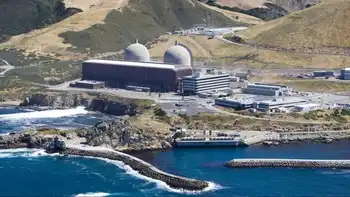
Should California classify nuclear power as renewable?
California Nuclear Renewable Bill AB 2898 seeks to add nuclear to the Renewables Portfolio Standard,…
View more
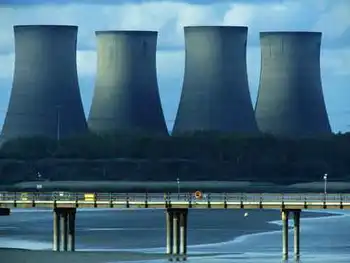
France nuclear power stations to limit energy output due to high river temps
France Nuclear Heatwave Restrictions signal reduced nuclear power along the Rhone River as EDF imposes…
View more

BC Hydro launches program to help coronavirus-affected customers with their bills
BC Hydro COVID-19 Bill Relief provides payment deferrals, no-penalty payment plans, Crisis Fund grants up…
View more

Bill Gates’ Nuclear Startup Unveils Mini-Reactor Design Including Molten Salt Energy Storage
Natrium small modular reactor pairs a sodium-cooled fast reactor with molten salt storage to deliver…
View more
NT Power Penalized $75,000 for Delayed Disconnection Notices
NT Power OEB Compliance Penalty highlights a $75,000 fine for improper disconnection notices, 14-day rule…
View more
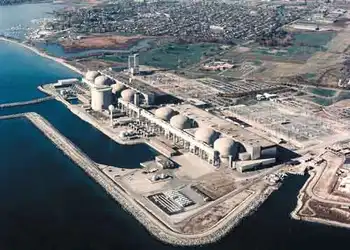
Time running out for Ontario to formally request Pickering nuclear power station extension
Pickering Nuclear Plant Extension faces CNSC approval as Ontario Power Generation pursues license renewal before…
View more
Sign Up for Electricity Forum’s Newsletter
Stay informed with our FREE Newsletter — get the latest news, breakthrough technologies, and expert insights, delivered straight to your inbox.
Electricity Today T&D Magazine Subscribe for FREE

Stay informed with the latest T&D policies and technologies.
- Timely insights from industry experts
- Practical solutions T&D engineers
- Free access to every issue

