Substation Relay Protection Training
Our customized live online or in‑person group training can be delivered to your staff at your location.
- Live Online
- 12 hours Instructor-led
- Group Training Available
Regular Price:
$699
Coupon Price:
$599
Two Ohio companies at the centre of the investigation into the worst blackout in the United States and Ontario warned state regulators five months ago that their power systems could overload if the grid linking U.S. and Canadian utilities had problems.
FirstEnergy Corp. and American Electric Power said in long-term forecast reports that they didn't expect any of their own transmission lines to fail this summer.
But both companies said that widespread outages were possible if the spaghetti-like system that links eastern states and Canada experienced changes in the flows of electricity, transfers of power between regions, unexpected demand increases and extreme weather.
Those are just the sorts of power grid disturbances that swept across eight states and Ontario on Aug. 14, spreading the outage to 50 million people.
Akron-based FirstEnergy is at the centre of a U.S.-Canada inquiry of what caused the outage. The most prominent theory is that a FirstEnergy power plant in Eastlake, Ohio, and some of its electricity transmission lines failed, including one that sagged into a tree.
The resulting surge of power in Ohio spread, rocketing across transmission lines in Indiana, Michigan, Ontario and New York that set off automatic power shutdowns.
The two Ohio power companies say the Public Utilities Commission of Ohio has heard the same grid overload warnings from them for years and there is nothing that state regulators could have done with that information to prevent the blackout.
"It's just a statement of reality. It's a recognition of the fact that we are all interconnected and that there are strengths and weaknesses to that," Ralph DiNicola, a FirstEnergy spokesman, said recently.
"The good is that being interconnected enhances reliability. The not-so-good is that what happens on adjacent systems could impact our system," DiNicola added.
In Indiana on Monday, state utility regulators were pressing James P. Torgerson, chief executive of the Midwest Transmission System Operator, to find out exactly what problems the grid manager saw before the blackout, and not just in Ohio.
FirstEnergy and AEP say investigators must look at what was occurring on the entire grid inside and outside Ohio in the hours before the blackout because abnormal activity elsewhere could have impacted their power systems' operations.
The Public Utilities Commission of Ohio asked power companies in an Oct. 15, 2002, letter to say in their annual long-term forecasts which transmission lines or substations were most likely to be overloaded and under what conditions. FirstEnergy and AEP filed their reports in April.
FirstEnergy identified none of its transmission infrastructure as prone to failure. Parts of its report were sealed from the public because the company had marked certain documents confidential. The utilities commission has asked it and other utilities to explain why the documents should not be released.
AEP's report indicated that a transformer at its South Canton facility in northeast Ohio was the most likely to overload if other utilities on the grid had unexpected outages or heavy demand.
The Columbus-based company said it would install a higher-capacity transformer before this summer to prevent problems, but it wasn't clear whether AEP did the upgrade. The company didn't immediately return a phone call seeking comment.
About 30 minutes before the Aug. 14 blackout, a line co-owned by FirstEnergy and AEP tripped as too much electricity coursed over it. The line is connected to the South Canton facility, where FirstEnergy's grid interconnects with AEP's neighbouring grid.
Other missed or ignored warnings have surfaced since the blackout.
The grid watchdog in the U.S., the North American Electric Reliability Council, issued a report three months ago singling out the Midwest as the only part of the country that risked such a devastating event. And more than a year ago the Federal Energy Regulatory Commission raised concerns that the region's fractured market threatened reliability.
Related News
Sudbury, Ont., eco groups say sustainability is key to grid's future
Sudbury Electrification and Grid Expansion is driving record power demand, EV charging, renewable energy planning,…
View more
EV Sales Still Behind Gas Cars
U.S. EV and Hybrid Sales 2024 show slower adoption versus gas-powered cars, as charging infrastructure…
View more
ABL Secures Contract for UK Subsea Power
ABL has secured a contract for the UK Subsea Power Link, highlighting ABL Group’s marine…
View more
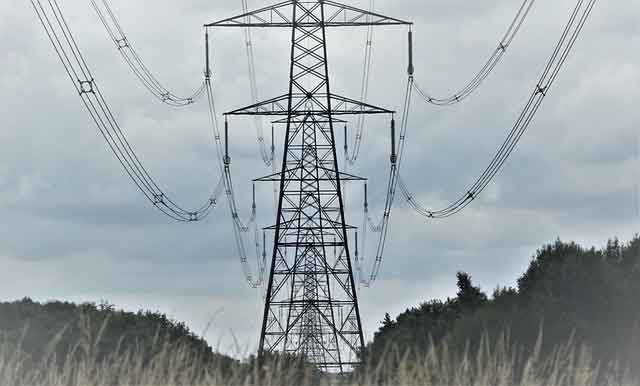
Bomb Cyclone Leaves Half a Million Without Power in Western Washington
Western Washington Bomb Cyclone unleashed gale-force winds, torrential rain, and coastal flooding, causing massive power…
View more
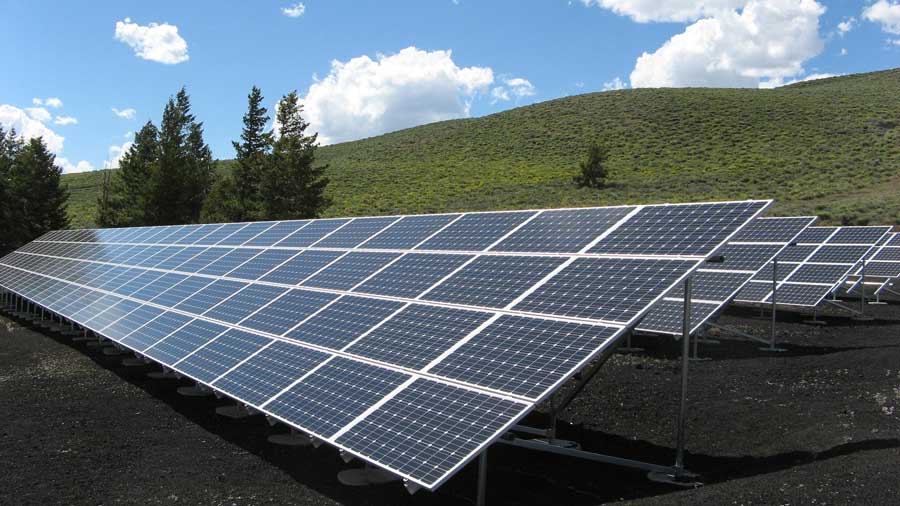
New rules give British households right to sell solar power back to energy firms
UK Smart Export Guarantee enables households to sell surplus solar energy to suppliers, with dynamic…
View more
Big prizes awarded to European electricity prediction specialists
Electricity Grid Flow Prediction leverages big data, machine learning, and weather analytics to forecast power…
View more
Sign Up for Electricity Forum’s Newsletter
Stay informed with our FREE Newsletter — get the latest news, breakthrough technologies, and expert insights, delivered straight to your inbox.
Electricity Today T&D Magazine Subscribe for FREE

Stay informed with the latest T&D policies and technologies.
- Timely insights from industry experts
- Practical solutions T&D engineers
- Free access to every issue
