Substation Relay Protection Training
Our customized live online or in‑person group training can be delivered to your staff at your location.
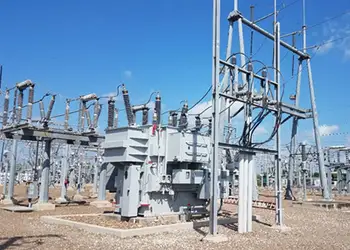
- Live Online
- 12 hours Instructor-led
- Group Training Available
Regular Price:
$699
Coupon Price:
$599
The sometimes conflicting goals of providing reliability, moderating power prices, deferring transmission investments, and avoiding the economic liabilities associated with third-party power transactions can cause transmission operators to take greater risks with the grid than they have in the past. This is according to a recent report titled "Cascading Blackout: Why Wasn't the Power Outage Contained?" This paper outlines the competitive pressures on existing transmission grid operations.
"If no contingencies occur, the transmission system usually operates smoothly; we maintain reliability, wholesale power prices are stable, and third-party generators gain access to markets," says Philip Mihlmester, Senior Vice President of ICF Consulting's Energy Practice. "However, if a contingency occurs under high-risk circum-stances, there is very little room for maneuverability," continues Mihlmester. "It's like driving a car at 30 mph and having a tire blow versus the same scenario while driving 100 mph. There is very little reaction time in the latter case."
So why was the blackout allowed to cascade throughout the Northeastern United States and portions of Canada, and not contained locally?
When a transmission line fails, the power flow must be redirected onto neighboring lines. Without sufficient reserve margin on those lines, they become overloaded -- causing a cascading effect -- shutting the system or a large portion of it down. A possible reason the cascade was not stopped is because neighboring transmission lines did not have sufficient reserve margin available due to heavy volumes of power flow. North America's power usage and the number of wholesale power transactions over the transmission lines have simply outgrown the existing transmission structure and the traditional reliability-based operational protocols. The transmission grid also suffers from declining investment over the past 25 years.
"Setting and enforcing consistent transmission reliability standards, as well as incentivizing additional capital investment in transmission, will help to prevent similar massive outages in the future," emphasizes Mihlmester.
To learn more about the competing pressures of grid operations, why containment failed, and recommendations on preventing future cascade occurrences, visit www.icfconsulting.com/cascade-containment.
Related News

Sustaining U.S. Nuclear Power And Decarbonization
Existing Nuclear Reactor Lifetime Extension sustains carbon-free electricity, supports deep decarbonization, and advances net zero…
View more

Hydro One reports $1.1B Q2 profit boosted by one-time gain due to court ruling
Hydro One Q2 Earnings surge on a one-time gain from a court ruling on a…
View more
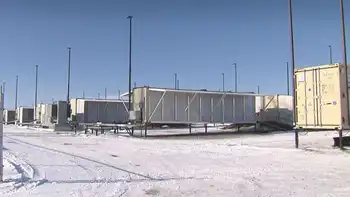
Electricity deal clinches $100M bitcoin mining operation in Medicine Hat
Medicine Hat Bitcoin Mining Deal delivers 42 MW electricity to Hut 8, enabling blockchain data…
View more
Electricity demand set to reduce if UK workforce self-isolates
UK Energy Networks Coronavirus Contingency outlines ESO's lockdown electricity demand forecast, reduced industrial and commercial…
View more

US power coalition demands action to deal with Coronavirus
Renewable Energy Tax Incentive Extensions urged by US trade groups to offset COVID-19 supply chain…
View more

Trump Is Seen Replacing Obama’s Power Plant Overhaul With a Tune-Up
Clean Power Plan Rollback signals EPA's shift to inside-the-fence efficiency at coal plants, emphasizing heat-rate…
View more
Sign Up for Electricity Forum’s Newsletter
Stay informed with our FREE Newsletter — get the latest news, breakthrough technologies, and expert insights, delivered straight to your inbox.
Electricity Today T&D Magazine Subscribe for FREE

Stay informed with the latest T&D policies and technologies.
- Timely insights from industry experts
- Practical solutions T&D engineers
- Free access to every issue
