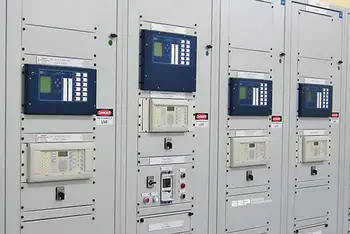
Protective Relay Training - Basic
Our customized live online or in‑person group training can be delivered to your staff at your location.
- Live Online
- 12 hours Instructor-led
- Group Training Available
Regular Price:
$699
Coupon Price:
$599
Fuel storage pools at nuclear power plants in 31 states may be vulnerable to terrorist attacks that could unleash raging fires and deadly radiation, scientists advised the government recently.
The group of nuclear experts said neither the government nor the nuclear industry "adequately understands the vulnerabilities and consequences of such an event." They recommended undertaking a plant-by-plant examination of fuel storage security as soon as possible.
In the meantime, plant operators promptly should reconfigure used fuel rods in the storage pools to lower decay-heat intensity and install spray devices to reduce the risk of a fire should a storage facility be attacked, the scientists said.
Congress sought the study by a National Academy of Science panel because of the heightened concerns that terrorists might seek to target nuclear power plants. A declassified version of the report was released April 6.
At 68 plants, including some already shut down, in 31 states, thousands of used reactor fuel rods are in deep water pools. Dry, concrete casks hold a smaller number of these rods.
Much more highly radioactive fuel is stored in pools than in the more protected reactors - 103 in total - at these sites.
Some scientists and nuclear watchdog groups long have contended that these pools pose a much greater risk of a catastrophic attack than do the reactors themselves.
Some plants where pools are all or partially underground present less of a problem. Others, including a series of boiling-water reactors where pools are more exposed, represent greater concern, said Bob Alvarez, a former Energy Department official who has argued for increased protection of used reactor fuel at nuclear plants.
The experts' report "pretty well legitimizes what we've been saying," Alvarez said in an interview.
The scientific panel said reinforced concrete storage pools - 25 feet to 45 feet deep, with water circulating to keep the fuel assemblies from overheating - could tempt terrorists.
The report said an aircraft or high explosive attack could cause water to drain from the pools and expose the fuel rods, unleashing an uncontrollable fire and large amounts of radiation.
Nuclear regulators said they would give the report's recommendations "serious consideration." But the NRC has disputed many findings and suggestions from the experts.
Related News
Tucson Electric Power plans to end use of coal-generated electricity by 2032
Tucson Electric Power Coal Phaseout advances an Integrated Resource Plan to exit Springerville coal by…
View more

Data Centers May Increase Canadian Electricity Bills
Analysts warn that rising data-center and AI demand threatens to push energy infrastructure costs onto…
View more
TransAlta Poised to Finalize Alberta Data Centre Agreement in 2025
TransAlta Alberta Data Centre integrates AI, cloud computing, and renewable energy, tackling electricity demand, grid…
View more
South Africa's Eskom could buy less power from wind farms during lockdown
Eskom Wind Power Curtailment reflects South Africa's lockdown-driven drop in electricity demand, prompting grid-balancing measures…
View more
Pandemic causes drop in electricity demand across the province: Manitoba Hydro
Manitoba Electricity Demand Drop reflects COVID-19 effects, lowering peak demand about 6% as businesses and…
View more
Why Fort Frances wants to build an integrated microgrid to deliver its electricity
Fort Frances Microgrid aims to boost reliability in Ontario with grid-connected and island modes, Siemens…
View more
Sign Up for Electricity Forum’s Newsletter
Stay informed with our FREE Newsletter — get the latest news, breakthrough technologies, and expert insights, delivered straight to your inbox.
Electricity Today T&D Magazine Subscribe for FREE

Stay informed with the latest T&D policies and technologies.
- Timely insights from industry experts
- Practical solutions T&D engineers
- Free access to every issue
