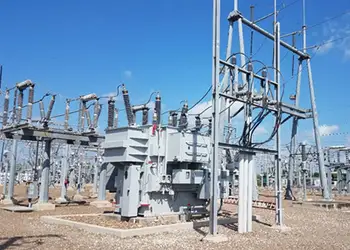
Substation Relay Protection Training
Our customized live online or in‑person group training can be delivered to your staff at your location.
- Live Online
- 12 hours Instructor-led
- Group Training Available
Regular Price:
$699
Coupon Price:
$599
A nuclear safety inspector discovered only by chance last fall that Atomic Energy of Canada Ltd. had continued to dump tens of thousands of gallons of hazardous radioactive waste into the ground for a decade after promising to stop, federal regulators were told recently.
Officials at the Canadian Nuclear Safety Commission admitted "losing track" of the problem for the last seven years because of staff turnover and poor record keeping.
Commission president Linda Keen told a public hearing here that the incidents raised questions about the competence of both AECL and the safety commission's officials and that more explanations were needed to get to the bottom of what went wrong.
"We want to be significantly reassured," Keen said.
Both AECL, a federal crown agency, and the commission's own staff were told to prepare comprehensive reports by September.
The dumping, which violated health and safety conditions of AECL's licence, took place at Canada's largest atomic research facility, the Chalk River Laboratories, a sprawling facility a two-hour drive north of Ottawa.
An investigation by the safety commission's staff concluded that waste dumping hadn't created a public health or safety hazard.
But the probe severely criticized the federal crown corporation for not taking action when the problem became known in 1995.
"Despite a wealth of information, numerous studies on the subject and the advice of their own staff, AECL continued a poor practice rather than adopt a lasting solution to the management of sewage sludge," for the Chalk River site, the report said.
"The practices... are not in keeping with AECL's assertion of being a leader in environmental management," it said.
The problem arose from a laundry used to wash the protective clothing of lab employees who work with radioactive materials.
The laundry discharge was mixed in with human sewage that was pumped into a primary treatment plant.
Liquid sludge from the plant was dumped about 15 times a year on sandy soil less than three kilometres from the Ottawa River.
Commissioner Dr. James Dosman called the dumping "a flagrant disregard of an important licensing condition by one of the largest operations that are regulated."
AECL vice-president Paul Fehrenbach shot back that the company could legally have spread the sludge portion of the waste on surrounding farmlands without violating the safety and environmental conditions of AECL's operating licence.
"We believe it was a recognized and approved process before November," Fehrenbach said, referring to the visit by the nuclear safety inspector.
The safety inspector noticed a dark, oily liquid on the ground in one corner of a waste disposal area at Chalk River.
The safety commission hadn't known that the sewage sludge was radioactive or that it was 98 per cent water and therefore quickly soaked through the ground to the water table.
AECL is now separating the radioactive solid sludge from the water and temporarily storing it in approved waste containers.
Related News
As California enters a brave new energy world, can it keep the lights on?
California Grid Transition drives decarbonization with renewable energy, EV charging, microgrids, and energy storage, while…
View more
Lawmakers push bill to connect Texas grid to rest of the nation
Connect the Grid Act links ERCOT to neighboring grids via high-voltage interconnections, enhancing reliability, resilience,…
View more
Independent power project announced by B.C. Hydro now in limbo
Siwash Creek Hydroelectric Project faces downsizing under a BC Hydro power purchase agreement, with run-of-river…
View more

Canada-U.S. Electricity Trade Adapts to Grid Pressures
Electricity trade between Canada and the United States is evolving as demand growth, climate impacts,…
View more

Ontario Energy Board prohibiting electricity shutoffs during latest stay-at-home order
OEB Disconnection Ban shields Ontario residential customers under the stay-at-home order, pausing electricity distributor shutoffs…
View more

British Columbia Draws Strong Interest in Clean Electricity Projects
British Columbia’s provincial utility reported unprecedented interest in its latest clean electricity procurement initiative, signalling…
View more
Sign Up for Electricity Forum’s Newsletter
Stay informed with our FREE Newsletter — get the latest news, breakthrough technologies, and expert insights, delivered straight to your inbox.
Electricity Today T&D Magazine Subscribe for FREE

Stay informed with the latest T&D policies and technologies.
- Timely insights from industry experts
- Practical solutions T&D engineers
- Free access to every issue
