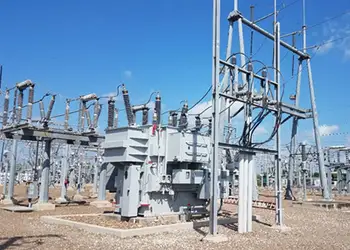
Substation Relay Protection Training
Our customized live online or in‑person group training can be delivered to your staff at your location.
- Live Online
- 12 hours Instructor-led
- Group Training Available
Regular Price:
$699
Coupon Price:
$599
Germany is set to miss its Kyoto target to cut greenhouse gas emissions as CO2 caps imposed on industrial and energy firms under an EU scheme are too modest, a government member from the junior coalition party the Greens said on recently.
The comment by Franzjosef Schafhausen, head of the government's climate working group, comes after Germany sent its national emissions plan (NAP) to Brussels on March 31.
"It is not sure that Germany will reach its Kyoto target as the (more lenient) NAP targets (for the industrial and energy sector) demand for more action from the transport and household sectors," said Schafhausen.
"If all sectors continue to emit as much CO2 as in recent years, we will miss our (Kyoto) target," he said at an energy forum at the Hanover engineering trade fair.
The plan, which aims for a cut in industrial carbon dioxide emissions to an annual average of 503 million tonnes in the period 2005-2007 and to 495 million by 2008-2012 from a current 505 million, is less stringent than an earlier proposal by Green party-led environment ministry.
Some 2,419 German industrial and energy sites will from next January take part in the European emissions trading scheme, which is the centrepiece of the EU's Kyoto Protocol efforts.
Firms unable to keep within their CO2 caps will have to buy extra emissions permits from companies that end up within their targets, thereby creating a market incentive to cut emissions.
Under the 1997 Kyoto Protocol, Germany targets a reduction of the six so-called greenhouse gases, including CO2, by 21 percent by 2008-2012 compared to 1990.
Schafhausen said recent data revealed that there was a strong upwards trend in CO2 output in Germany's energy sector, while the industrial sector revealed a decline since 1999.
CO2 emissions by households rose or fell depending on weather conditions, while emissions by the transport sector were still significantly higher than in 1990, he said.
Brussels has until the end of June to review Germany's national emissions plan and some analysts have said it could reject Berlin's targets as too lenient.
Related News
South Australia rides renewables boom to become electricity exporter
Australia electricity grid transition is accelerating as renewables, wind, solar, and storage drive decentralised generation,…
View more

Ameren, Safe Electricity urge safety near downed lines
Downed Power Line Vehicle Safety: Follow stay-in-the-car protocol, call 911, avoid live wires and utility…
View more
Zero-emission electricity in Canada by 2035 is practical and profitable
Canada 100% Renewable Power by 2035 envisions a decentralized grid built on wind, solar, energy…
View more

Notley announces plans to move Alberta's electricity grid to net-zero by 2035 if elected
Alberta NDP Net-Zero Electricity Plan targets a 2035 clean grid, expands renewable energy, cuts emissions,…
View more

Expanding EV Charging Infrastructure in Calgary's Apartments and Condos
Calgary EV Charging for Apartments and Condos streamlines permitting for multi-unit dwellings, guiding condo boards…
View more

Sen. Cortez Masto Leads Colleagues in Urging Congress to Support Clean Energy Industry in Economic Relief Packages
Clean Energy Industry Support includes tax credits, refundability, safe harbor extensions, EV incentives, and stimulus…
View more
Sign Up for Electricity Forum’s Newsletter
Stay informed with our FREE Newsletter — get the latest news, breakthrough technologies, and expert insights, delivered straight to your inbox.
Electricity Today T&D Magazine Subscribe for FREE

Stay informed with the latest T&D policies and technologies.
- Timely insights from industry experts
- Practical solutions T&D engineers
- Free access to every issue
