CSA Z463 Electrical Maintenance -
Our customized live online or in‑person group training can be delivered to your staff at your location.

- Live Online
- 6 hours Instructor-led
- Group Training Available
Regular Price:
$249
Coupon Price:
$199
WASHINGTON —
The idea of a North American or continental energy policy has been around for years; indeed, going back to the days of the administration of then U.S. president Richard Nixon in the early 1970s.
That was when, in the aftermath of the 1974 Arab oil embargo, the United States produced maps largely erasing the Canadian border and showing vast potential oil and gas reserves in Canada as part of those available to meet future U.S. needs. Canadians reacted negatively, and the idea was dropped.
Today, the George W. Bush administration is again talking up what it calls North American energy security, with an eye to meeting as much of the United States' imported energy needs as possible from Canada and Mexico, thereby reducing dependence on the Middle East.
This time, the administration is showing more readiness to work with Mexico as part of the dialogue, though each country is pursuing its own national interest. A North American or continental energy policy has not been discussed, but rather pragmatic measures and greater information sharing, notably in electricity, natural gas and oil.
"North America needs to be seen as a region facing common energy challenges," Felipe Calderon, Mexico's secretary of energy, said at the recent Mexico-U.S. Business Committee conference here. He spoke of a clear need to foster co-operation among the three countries on regulatory issues, the environment and supply and security of the system.
"These are some areas where our governments need to work closely to assure a favourable outcome for all our citizens," Calderon said. But, he stressed, "each nation needs to act with respect for each other's policies and decisions. This is a crucial point for Mexico."
For example, Mexico's constitution puts the country's oil and gas reserves firmly under state ownership, something Americans would like to change.
The pragmatic approach to North American energy can be seen in the North American Electric Reliability Council, a trilateral organization of private-sector and public electric utilities that includes all Canadian provinces and the so-called lower 48 U.S. states and Mexico, operating through a series of regional councils to foster the reliability and interoperability of electric power grids.
Likewise, the North American Energy Working Group was launched by Canada, the United States and Mexico in March, 2001, by then energy ministers Ralph Goodale of Canada and Ernesto Martens of Mexico, along with U.S. Energy Secretary Spencer Abraham.
The group's mandate is to "foster communication and co-operation among the governments and energy sectors of the three countries on energy-related matters of common interest, and to enhance North American energy trade and interconnections with the goal of sustainable development, for the benefit of all." But this process "fully respects the domestic policies, divisions of jurisdictional authority and existing trade obligations of each country."
In June, 2002, the group published a detailed profile of the energy sectors in each of the three countries, and has since published another report on energy-efficiency standards and labelling. The group will soon publish a report on the North American natural gas situation and has a variety of expert groups, such as one on energy science and technology. This is the way North American energy co-operation is likely to evolve: through practical arrangements where each country has an interest. Ontario, for example, is a net importer of electricity from the United States and has serious concerns since last year's major power blackout, and so has a stake in the reliability of the cross-border electric grid.
But Joseph Duckert, a long-standing player in the formulation of U.S. energy policy, says, "there is no continental `energy constitution,' and I do not expect one in my lifetime. Nor will there be a single North American energy policy." Issues of sovereignty, national interest and differences in approach will make a common policy unlikely.
Instead, he says, "having been closely associated with the formulation and expression of U.S. energy policy over a long period," he is convinced we will pursue a "policy in practice," with co-operative mechanisms, such as the North American Electrical Reliability Council and the North American Energy Working Group, helping to achieve the interests of each country.
The idea of a single North American energy strategy may appeal to academics and editorialists.
But a more practical approach that leaves each country free to co-operate and share information but still adopt individual approaches and priorities is the more likely prospect — and the better one.
Related News
Sudbury, Ont., eco groups say sustainability is key to grid's future
Sudbury Electrification and Grid Expansion is driving record power demand, EV charging, renewable energy planning,…
View more
U.S. Ends Support for Ukraine’s Energy Grid Restoration
US Termination of Ukraine Energy Grid Support signals a policy shift: USAID halts aid for…
View more
Power Outage Disrupts Travel at BWI Airport
BWI Power Outage caused flight delays, cancellations, and diversions after a downed power line near…
View more
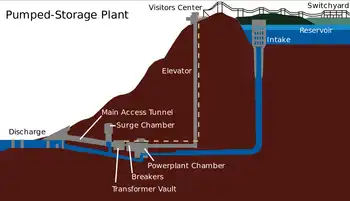
Hydroelectricity Under Pumped Storage Capacity
Pumped Storage Hydroelectricity balances renewable energy, stabilizes the grid, and provides large-scale energy storage using…
View more
New York State to investigate sites for offshore wind projects
NYSERDA Offshore Wind Data initiative funds geophysical and geotechnical surveys, seabed and soil studies on…
View more
Metering Pilot projects may be good example for Ontario utilities
Ontario Electricity Pricing Pilot Projects explore alternative rates beyond time-of-use, with LDCs and the Ontario…
View more
Sign Up for Electricity Forum’s Newsletter
Stay informed with our FREE Newsletter — get the latest news, breakthrough technologies, and expert insights, delivered straight to your inbox.
Electricity Today T&D Magazine Subscribe for FREE

Stay informed with the latest T&D policies and technologies.
- Timely insights from industry experts
- Practical solutions T&D engineers
- Free access to every issue

