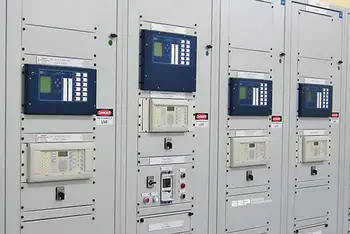
Protective Relay Training - Basic
Our customized live online or in‑person group training can be delivered to your staff at your location.
- Live Online
- 12 hours Instructor-led
- Group Training Available
Regular Price:
$699
Coupon Price:
$599
Researchers at Purdue University said recently that they have come up with a way to cool computer chips by using the power of electrical storms.
Mechanical engineers at Purdue have filed patents for technologies that eventually could be used to create a device that would cool computer chips by generating lightning and wind on a microscopic level using carbon nanotubes. The patents arose from a research project funded in part by the U.S. National Science Foundation.
The researchers have only demonstrated the idea conceptually, but they assert that it could help future computer builders tackle the growing problem of chip generated heat in a more reliable way than they could through liquid cooling.
In the Purdue device, an array of carbon nanotubes — long, thin strands of specialized carbon molecules — would be placed near a chip. A negative charge would be applied to some of the nanotubes, which would cause electrons to be emitted. When the electrons mix with the surrounding air, the air becomes ionized. The microscopic cloud of ionized air then leads to an imbalance of charge in the micro-atmosphere, and lightning results. It's microscopic lightning, but the principle is the same as in an electrical storm.
Meanwhile, the cloud of electrons would be alternatively attracted to and repelled by adjacent electrodes. Alternating the voltages on the electrodes creates a cooling breeze because the moving cloud stirs the air.
"To create lightning, you need tens of kilovolts, but we do it with 100 volts or less," said a statement from Suresh Garimella, a professor of mechanical engineering at Purdue who is working on the device. "In simple terms, we are generating a kind of lightning on a nano-scale here."
The next step for the researchers will be to develop a prototype and examine different materials along with nanotubes that could be used in the device. Several technical problems will also likely have to be resolved before these types of devices, even if made, can be put into computers. Semiconductors, for instance, are wrapped with spark arresters. Static electricity can blow a hole through a chip, and the Purdue device is essentially creating static.
Heat is the chief problem facing semiconductor designers today. Future microprocessors will generate as much heat, proportionally speaking, as a nuclear power plant if solutions are not developed, several researchers have theorized. IBM, Intel and others have already begun inserting energy-conserving technology into their chips.
Several start-ups and established companies are also looking at better heat sinks, which draw heat away from chips and into the atmosphere. Additionally, some companies, such as Zyvex and Carbon Nanotechnologies, are devising ways to use carbon nanotechnologies in gels that will remove heat from tiny places.
Related News

The UK’s energy plan is all very well but it ignores the forecast rise in global sea-levels
UK Marine Energy and Climate Resilience can counter sea level rise and storm surge with…
View more

Britons could save on soaring bills as ministers plan to end link between gas and electricity prices
UK Electricity-Gas Price Decoupling aims to reform wholesale electricity pricing under the Energy Security Bill,…
View more
Ontario Teachers Pension Plan agrees to acquire a 25% stake in SSEN Transmission
Ontario Teachers SSEN Transmission Investment advances UK renewable energy, with a 25% minority stake in…
View more

The Great Debate About Bitcoin's Huge Appetite For Electricity Determining Its Future
Bitcoin Energy Debate examines electricity usage, mining costs, environmental impact, and blockchain efficiency, weighing renewable…
View more
Electricity prices in Germany nearly doubled in a year
Germany Energy Price Hikes are driving electricity tariffs, gas prices, and heating costs higher as…
View more

In 2021, 40% Of The Electricity Produced In The United States Was Derived From Non-Fossil Fuel Sources
Renewable Electricity Generation is accelerating the shift from fossil fuels, as wind, solar, and hydro…
View more
Sign Up for Electricity Forum’s Newsletter
Stay informed with our FREE Newsletter — get the latest news, breakthrough technologies, and expert insights, delivered straight to your inbox.
Electricity Today T&D Magazine Subscribe for FREE

Stay informed with the latest T&D policies and technologies.
- Timely insights from industry experts
- Practical solutions T&D engineers
- Free access to every issue

