Substation Relay Protection Training
Our customized live online or in‑person group training can be delivered to your staff at your location.
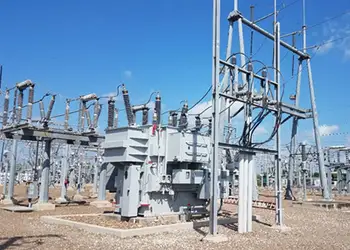
- Live Online
- 12 hours Instructor-led
- Group Training Available
Regular Price:
$699
Coupon Price:
$599
The nascent recovery that has lifted the Argentine economy over the last year is being threatened by a shortage of electricity and gas, which is appearing just as the weather in the Southern Hemisphere turns cool ahead of winter.
"The emergency has already arrived," the economy minister, Roberto Lavagna, said recently on a television program.
But government officials appear divided as to how to confront the situation, with some, including President Néstor Kirchner, blaming utility companies and threatening to punish them, while others, like Mr. Lavagna, favor rate increases for them.
After six years of decline, including an 11 percent contraction in 2002, the Argentine economy expanded 8.7 percent last year. Growth estimates for this year are about 7 percent, but those projections assume a steady supply of energy and access to foreign credits and investment, and all those assumptions now appear to be in jeopardy.
The Argentine government, which defaulted on a record $141 billion in public debt late in 2001, is locked in difficult negotiations with its private creditors, who have refused an offer of 25 cents on the dollar. The energy shortage has made capital even more scarce, as potential investors worry about bottlenecks in industry and agriculture.
Recently the government was reported to be considering a plan for rolling blackouts throughout the country. But public response and the impact on markets here and abroad was so negative that the government immediately began looking for other, less harsh measures.
Recently, voltage across the country was reduced by 5 percent, leading to concerns that computers and other delicate instruments would fail or suffer damage. In addition, the government has imposed intermittent consumption cuts on 31 of the country's largest commercial users of electricity, like steel mills and supermarket chains.
Apprehension is also growing in neighboring Chile, which has the most dynamic economy in the region. Chile imports from Argentina about 90 percent of the natural gas it consumes, and gas, in turn, provides one-third of the energy generated in the country. But Chile has been told that the contracts that guarantee a steady supply of fuel from Argentina will not be honored.
"We are going back to Santiago with a great deal of concern," Chile's economy minister, Jorge RodrÃguez Grossi, said after a meeting here late last week with Argentine officials. "Never did we expect that Argentina would take these measures. Even during the cold war, the Soviet Union never stopped selling oil and gas to Europe."
Bolivia, Venezuela and Brazil, which suffered its own energy shortage three years ago, are promising to step up shipments of gas or oil to relieve shortages in Argentina. Nevertheless, regulatory agencies are talking of the possibility of reducing lighting at shopping centers, in public buildings and on the street to further economize on consumption.
A drought that has cut water supplies for hydroelectric plants is partly responsible for the situation. But the main culprit seems to be the lack of investment in production and transportation links by power companies and the 28 natural gas companies that operate in Argentina and provide the fuel that generates about half of the country's electricity supply.
The reasons for that shortfall in investment have been widely and sharply debated. To some, energy companies here are acting like their counterparts in California just a few years ago and trying to blackmail consumers; to others, it is the government's obstinacy that is at fault.
Argentina's government-owned power grid was privatized in the early 1990's, in the hope that increased competition would bring lower rates. Instead, rates rose, especially for residential users, and despite record profits, utilities failed to make the investments in maintenance and expanding capacity that were required in their contracts.
"They have been telling us that there is not going to be power, but gas producers have not been making investments since 1996," Mr. Kirchner said recently. "Now they are going to have to deliver gas, and if not, we as the government will have to take whatever measures we must." He added: "We are not going to cede to any pressures, no matter how strong."
But the big utilities prefer to look at the numbers on their balance sheet since the collapse of the economy late in 2001. As a result of a court-imposed freeze on electric rates and the sharp devaluation of the peso, rates here are now among the lowest in the world in dollar terms, and energy companies are threatening not to invest unless relief is granted.
"For us, it is not an obligation to invest," said Pablo Yrarrázaval, chairman of the Spanish company Enersis, which has numerous projects in the region and is the largest power holding company in Latin America. "The obligation is for the government to set the rules of the game necessary for the companies to invest and satisfy demand."
The government recently allowed power companies to raise rates for large industrial users for the first time since the devaluation two years ago, by 15 percent. But the utilities, whose position is supported by the International Monetary Fund, have been seeking much larger increases, of as much as 139 percent in some cases, as a condition for resuming investment.
"Unfortunately, now there is a need to save and then invest," Mr. Lavagna said. "Argentina has a lot of energy resources, but that requires investors."
Related News
Reconciliation and a Clean Electricity Standard
Clean Electricity Standard (CES) sets utility emissions targets, uses tradable credits, and advances decarbonization via…
View more
Cost of US nuclear generation at ten-year low
US Nuclear Generating Costs 2017 show USD33.50/MWh for nuclear energy, the lowest since 2008, as…
View more
GM president: Electric cars won't go mainstream until we fix these problems
Electric Vehicle Adoption Barriers include range anxiety, charging infrastructure, and cost parity; consumer demand, tax…
View more
Cleaning up Canada's electricity is critical to meeting climate pledges
Canada Clean Electricity Standard targets a net-zero grid by 2035, using carbon pricing, CO2 caps,…
View more
Ontario explores possibility of new, large scale nuclear plants
Ontario Nuclear Expansion aims to meet rising electricity demand and decarbonization goals, complementing renewables with…
View more

Global: Nuclear power: what the ‘green industrial revolution’ means for the next three waves of reactors
UK Nuclear Energy Ten Point Plan outlines support for large reactors, SMRs, and AMRs, funding…
View more
Sign Up for Electricity Forum’s Newsletter
Stay informed with our FREE Newsletter — get the latest news, breakthrough technologies, and expert insights, delivered straight to your inbox.
Electricity Today T&D Magazine Subscribe for FREE

Stay informed with the latest T&D policies and technologies.
- Timely insights from industry experts
- Practical solutions T&D engineers
- Free access to every issue
