
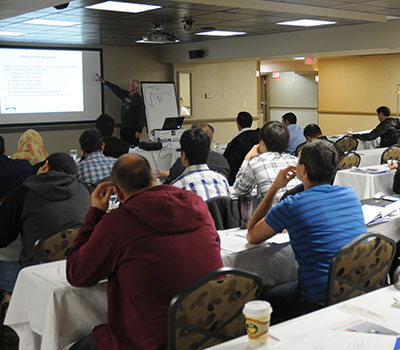
VFD Training


VFD Training - Click Here For Your FREE Onsite Electrical Training Quotation

Course Duration: 2 Days

Course Description:
The objective of this VFD training course is to build confidence in the student by providing him/her with useful information and practical hands-on exercises that demonstrate the relevance of the course material.

Who Should Attend:
This course is recommended for electrical engineers, technicians, designers and electrical maintenance personnel responsible for variable frequency drives.

Course Objectives:
This course is designed to enable participants to:

  • Properly Matching A Drive to A Machine
  • Choosing the Correct Motor
  • Choosing the Best Type of Variable Frequency Drive (VFD)
  • Identify & Correct Drive System Problems
  • Identify & Test Major Drive Components
  • Perform Start-Up of an AC Drive
  • Program & Adjust the Drive for Desired Operation


Course Outline:

I. INTRODUCTION

  1. Evolution of VFD Control
  2. Modern Types of Variable Frequency Drives (VFD)

II. Mechanical Theory

  1. Horsepower Defined
  2. Torque Defined
  3. Example Horsepower and Torque Calculations
  4. Common Types of Mechanical Loads
  5. Characteristics of Variable Torque and Constant Torque Loads

III. Basic VFD Electricity Theory

  1. Electrical/Hydraulic Circuit Analogy
  2. Resistance, Voltage, and Current Defined

IV. Introduction to AC Motors

  1. Examination of Motor Nameplates and NEMA Designations
  2. Locked Rotor Current and Full Load Current
  3. Anatomy of a Motor
  4. Magnetic Poles and Frequency as Related to Motor Speed
  5. Torque Characteristics Motors Operated “Across-the-Line”
  6. Torque Characteristics of Motors Operated on VFDs
  7. Effects VFDs on Motor Operation and Life Expectancy

V. PWM AC VFDs

  1. Common Types of PWM Drives
  2. Examination of the Main Power Circuit
  3. Electronic Component Identification
  4. The PWM Wave Form
  5. Voltage and Frequency Relationships and Effects on Motor Performance
  6. Control of Drive System Torque and Horsepower Output
  7. Torque Output Comparisons of AC Drives VS. Conventional Means of Speed Control
  8. Standing Wave (Reflective Wave) Phenomena on Motor Cables
  9. Disassembly of an AC Drive
  10. Component Identification
  11. Various Designs of Drives
  12. Reassemble, Test, Start-Up of AC Drive With Proper Techniques
  13. Hands-On Programming and Operation of an AC Drive and Motor
  14. Adjust Minimum and Maximum Speed
  15. Reset Drive to Factory Defaults
  16. Adjusting Torque Output
  17. General Drive Programming
  18. Methods of Speed and Torque Control

VI. VFD Applications

  1. Methods of Proper Drive Selection
  2. Multi-Motor Drive Systems With Example Problem
  3. Using VFDs to Eliminate Geared Speed Reducers
  4. Effects of AC Drives on Geared Speed Reducers
  5. Replacing Mechanical Speed Changers With VFDs

VII. Conclusion and Summary


    About The Electricity Forum

    The Electricity Forum has established its role as one of North America's leading technical training organizers on subjects of policy and technical common interest to electric power generators and large power consuming companies. With headquarters in Pickering, Ontario, and Geneva, NY, The Electricity Forum is dedicated to providing cost-effective, highly specialized information in the format of forums, electrical training tutorials, and industry-wide events. Since 1986, more than 25,000 delegates from leading companies have attended our forums and seminars.


e-Store
 
Affiliates
 
Featured Product

Powerful Tools for Electrical Power Systems

ESA, Inc. / EasyPower
ESA, the developers of EasyPower, sets the industry standard when it comes to power system software.
more...
 
Advertisement
 
Latest Buyer's Guide Companies
Sign Up Today and Receive Our FREE E- Newsletter
E-newsletter service - Exciting industry trends, technical developments, product information, forums and electrical training courses.