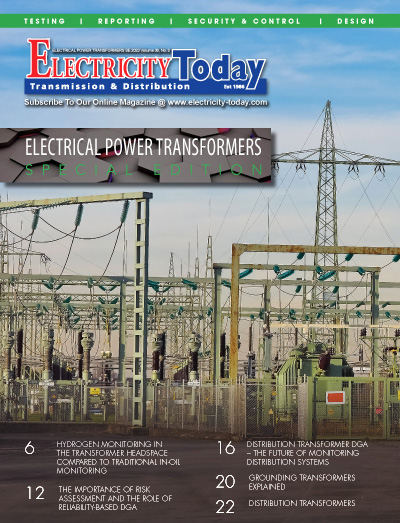
Electricity Today Magazine
 
Electricity and Electrical Energy Matters
 

Electricity Policies and Technologies Since 1986


Variable Frequency Drive

Publication Date: May, 2005
Discount Price: $24.50 (Cdn)


Discount Price: $20.50 (U.S.)

Variable Frequency Drive Handbook - Volume 1


This Variable Frequency Drive handbook is an invaluable resource on the maintenance and usage of VFDs, their characteristics in commercial and industrial applications and the issues surrounding feeder cables and motors when applied to VFD systems.
CONTENT:
  • The Basics
  • Frequently Asked Questions About Adjustable Speed Drives
  • Harmonic Distortion Damages Equipment and Creates a Host of Other Problems
  • How to PM VFDs
  • Control Arrangements for an Adjustable Frequency Drive
  • Isolating Electric Machine Windings for Field Testing
  • Considerations for the Use of AC Induction Motors on these devices in High Performance Applications
  • Basic Parts and Operation of an Adjustable Frequency Drive
  • Applications for Motor Current Signature Analysis
  • The Need for Industry Standards for AC Induction Motors Intended for Use with Adjustable Frequency Controllers
  • 10 Benefits Adjustable Speed AC Drives Provide to Industrial Users
  • AC Induction Motors as Part of Variable Speed Drive Systems
  • The Case for VFDs as a Final Control Element
  • Benefits of Variable Speed Drives
  • Web-enabling equipment
  • Energy Efficiency
  • Dealing with Line Harmonics from PWM VFDs
  • Understanding VFDs
  • Variable-Frequency Drive
  • Current Shield Technology for Clean Room Applications
  • How to Maintain a VFD
  • Also: Directory of Manufacturers and Suppliers
    -- 96 Pages

Product description: A Variable Frequency Drive (sometimes abbreviated VFD) is system for controlling the rotational speed of an alternating current (AC) electric motor by controlling the electrical power supplied to the motor. A VFD is a specific type of adjustable speed drive. These devices are also known as adjustable frequency drives (AFD), (VSD), AC drives or inverter drives.
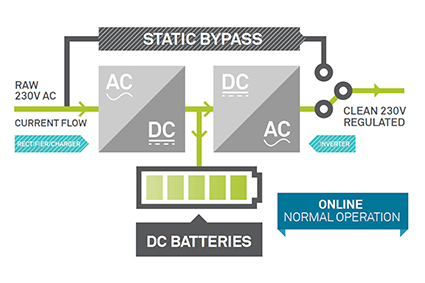
VFD controllers are solid state electronic power conversion devices. The usual design first converts AC input power to DC intermediate power using a rectifier bridge. The DC intermediate power is then converted to quasi-sinusoidal AC power using an inverter switching circuit. The rectifier is usually a three-phase diode bridge, but controlled rectifier circuits are also used. Low power models are often configured for use with single-phase input power.
VFDs are available with voltage and current ratings to match the majority of 3-phase motors that are manufactured for operation from utility (mains) power. VFD controllers designed to operate at 110 volts to 690 volts are often classified as low voltage units. Low voltage units are typically designed for use with motors rated to deliver 0.2kW or 1/4 horsepower (Hp) up to at least 750kW or 1000Hp. Medium voltage VFD controllers are designed to operate at 1kV to 10kV. Medium voltage units are typically designed for use with motors rated to deliver 375kW or 500Hp and above. Medium voltage units rated above 7kV and 5000 or 10,000Hp should probably be considered to be one-of-a-kind (one-off) designs.


Variable Frequency Drives Handbook - Available at The Electricity Forum U.S. eStore
For more Information on multiple purchase discounts Contact:
Lisa Kassmann at (905) 686-1040
fax: (905) 686-1078
e-mail: lisa@electricityforum.com
Copyright © 2008
All Rights Reserved.
Home | Sitemap | Forums & Courses | T&D Engineering Magazine | Product Showcases | T&D Buyer's Guide Companies/Products | Generation Companies/Products | Request For Quotation Service | Industry News | Industry Links | eStore - Bookstore
215-1885 Clements Rd., Pickering, ON, Canada, L1W 3V4
t: 905.686.1040 f: 905.686.1078
Ste. 402, One Franklin Square, Geneva, NY, U.S., 14456
t: 315.789.8323 f: 315.789.8940